
Pouch Battery Equipment
China's No.1 Soft Pack Battery Equipment Manufacturer
Tertron is your reliable source of Pouch Battery Equipment in the lithium-ion and sodium-ion battery industry from China. Our state-of-the-art equipment is designed to streamline the production of pouch cells, ensuring high efficiency and superior quality. Whether you require standard or customized pouch cell assembly equipment, we can tailor our solutions to meet your specific needs, helping you stay ahead in the rapidly evolving battery market.

Supply"Turnkey"Project service

24/7 after-sales support, prompt issue resolution

One year’s limited warranty with lifetime technical support

Operation manual, operation or repairing Video support
Types Of Soft Pack Battery Equipment Manufactured by Tertron
Tertron, a leading manufacturer of battery production and testing equipment in China, offers a range of advanced solutions for the rapidly growing soft pack cell industry. With a focus on efficiency, precision, and safety, Tertron’s Pouch Battery Equipment is designed to optimize every stage of the battery manufacturing process.
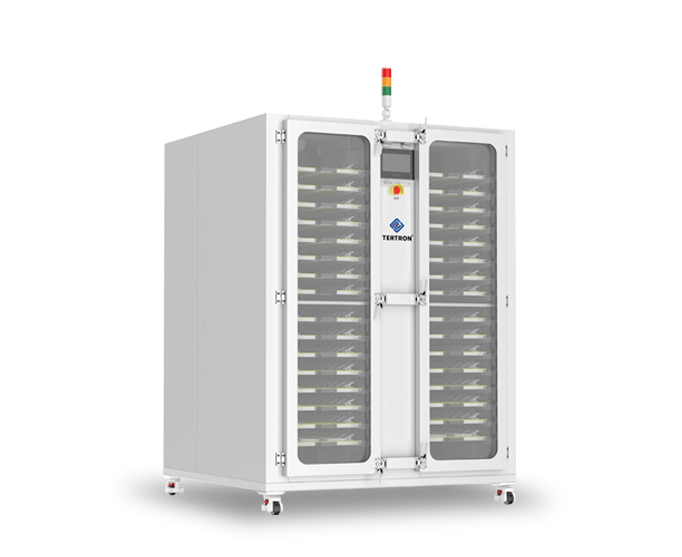
Pouch Cell capacity grading machine
Tertron's Pouch Battery Capacity Grading Machine is a reliable and efficient solution for testing and sorting pouch batteries. It features customizable grading parameters, automated sorting processes, and high-precision measurement tools. The machine ensures compatibility with various battery sizes and chemistries, and its intuitive user interface simplifies operation and monitoring.
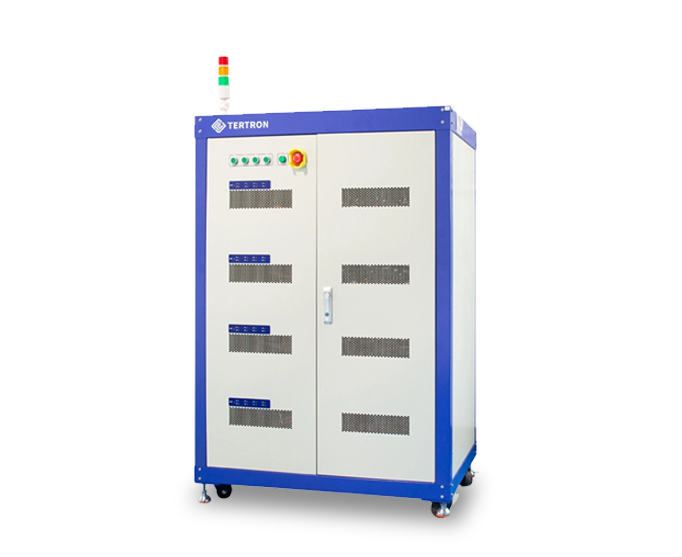
Pouch Battery Pack Aging Machine
Tertron's Pouch Battery Pack Aging Machine simulates real-world conditions to test battery performance and lifespan. The machine maintains a controlled environment and allows for customizable testing processes. It features multi-channel testing, precise monitoring, and data logging capabilities. Safety features and a user-friendly interface ensure efficient integration into battery manufacturing workflows.
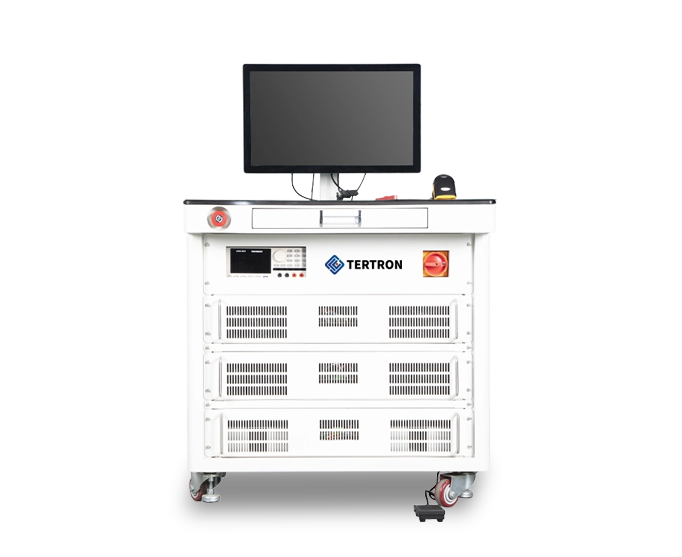
Pouch Battery Pack Integrated Tester
Tertron's Pouch Battery Pack Integrated Tester efficiently evaluates battery pack performance. It supports charging-activated battery functions and programmable test items. The tester measures key parameters such as voltage, internal resistance, and protection functions. It detects defective batteries, improves production efficiency, and ensures product safety. The intuitive software interface controls multiple devices simultaneously.
Usage of Battery by Tertron’s Pouch Battery Equipment
Tertron’s Pouch Battery Equipment finds applications across diverse industries, from battery cell manufacturing to consumer electronics and renewable energy storage. These machines play a crucial role in ensuring the production of high-quality soft-pack batteries for various purposes, enabling manufacturers to meet the growing demand for reliable and efficient energy solutions.
Industrial Drones
Industrial Drones
Energy Storage
Energy Storage
Car Batteries
Car Batteries
Boat Batteries
Boat Batteries
Accumulators
Accumulators
Power Tools
Power Tools
Our Advantages
Tertron stands out in the pouch battery equipment industry with its comprehensive solutions and customer-centric approach. From expert technical support to competitive pricing and customized equipment, Tertron offers a range of advantages that set it apart from competitors, ensuring customers receive the best value and support for their battery production needs.

Experienced engineering team
Our team provides technical guidance and training for cylindrical battery production

Extensive export experience
We serve over 40 countries with 100+ complete lithium-ion battery and supercapacitor production projects

Strong production capacity
Three factories spanning 10,000 square meters offer large production capacity using global, well-known brand components

Customer-centric
Dedicated, enthusiastic team prioritizes creating customer value and long-term partnerships for mutual growth
Choosing Tertron Pouch Battery Equipment is The Wisest Decision
Tertron, with its experienced specialist, Precision redefined: with advanced testing technology, Our Battery Tester guarantees precise results, rapid testing and robust compatibility for diverse batteries
Frequently Asked Questions
Want to know more about Pouch Battery Equipment
What is a pouch battery, and how does it differ from other battery types?
Pouch battery, commonly used for Lithium Polymer cells with solid electrolytes, offer low-cost, flexible construction. Electrodes and solid electrolytes are stacked in layers or laminations and sealed in a foil envelope. Unlike cylindrical or prismatic batteries, pouch batteries have a flat, rectangular shape that allows for more efficient use of space and higher energy density. This makes them ideal for applications where weight and size are critical factors, such as in electric vehicles, drones, and portable electronics.
Why should I choose pouch batteries over cylindrical or prismatic batteries for my application?
Pouch batteries offer several advantages over other battery types, including:
- Higher energy density: Pouch batteries can store more energy in a smaller space, making them ideal for weight-sensitive applications.
- Flexibility: The soft pouch casing allows for some degree of flexibility in battery design and packaging.
- Improved safety: Pouch batteries have a lower risk of thermal runaway and explosion compared to cylindrical batteries.
- Cost-effectiveness: Pouch batteries can be more cost-effective than other battery types due to their simpler manufacturing process and materials.
What are the key technical parameters I should consider when selecting a pouch battery?
When choosing a pouch battery, consider the following technical parameters:
- Nominal voltage (V): The standard operating voltage of the battery.
- Capacity (Ah): The amount of charge the battery can store.
- Energy density (Wh/kg or Wh/L): The amount of energy stored per unit weight or volume.
- Discharge rate (C-rate): The maximum safe current at which the battery can be discharged.
- Cycle life: The number of charge-discharge cycles the battery can withstand before its capacity drops below a certain threshold (usually 80% of its initial capacity).
- Operating temperature range: The temperature limits within which the battery can safely operate.
How do I properly charge and discharge my pouch battery to ensure optimal performance and longevity?
To maximize the performance and lifespan of your pouch battery, follow these guidelines:
- Use a compatible charger designed for your specific battery chemistry and voltage.
- Charge the battery at the recommended C-rate (typically 0.5C to 1C) to avoid overheating and damage.
- Avoid overcharging or over-discharging the battery, as this can lead to capacity loss and reduced cycle life.
- Monitor the battery’s temperature during charging and discharging, and ensure it stays within the recommended operating range.
- Store the battery in a cool, dry place at around 50% state of charge when not in use for extended periods.
What should I do if my pouch battery is not performing as expected or shows signs of damage?
If you notice any of the following signs, stop using the battery immediately and consult a professional:
- Reduced capacity or shorter runtime than expected
- Swelling or deformation of the pouch casing
- Excessive heat generation during charging or discharging
- Leakage of electrolyte or unusual odors
- Inconsistent voltage readings or sudden drops in voltage
In some cases, the battery may need to be replaced or recycled. Always follow the manufacturer’s guidelines and local regulations for safe handling and disposal of damaged or depleted batteries.
Can you give me some examples of real-world applications where pouch batteries are commonly used?
Pouch batteries are used in a wide range of applications, including:
- Electric vehicles (EVs): Pouch batteries are used in many EVs due to their high energy density and space-saving design.
- Drones and UAVs: The lightweight and compact nature of pouch batteries makes them ideal for aerial applications.
- Portable electronics: Smartphones, tablets, and laptops often use pouch batteries to maximize battery life and minimize device thickness.
- Medical devices: Pouch batteries are used in medical devices such as wearable sensors and implantable devices due to their reliability and safety.
- Energy storage systems (ESS): Large-scale pouch battery packs are used in stationary energy storage applications, such as grid-tied systems and off-grid renewable energy systems.
What is the difference between a pouch battery and a prismatic battery?
Pouch cells, lacking a solid safety casing, are vulnerable to punctures and impacts. They struggle under vibration and stress, risking damage, short-circuits, or leakage, unlike the sturdier prismatic cells.
Who uses pouch batteries?
Pouch cell lithium-polymer batteries are commonly used in military, automotive, and portable applications, including drones and hobby gadgets, where high load currents are needed.
How do I install and operate the machine myself?
Our system is designed for easy setup. Simply connect the machine to a power supply, and it’s ready to use with pre-installed English software. A complete English user manual is included to help you learn the software.
How to control quality?
- All raw materials undergo IQC (Incoming Quality Control) inspection before entering the production process.
- IPQC (In-Process Quality Control) conducts patrol inspections during production.
- Finished products are fully inspected by QC before moving to the packing stage.
- OQC (Outgoing Quality Control) performs a full inspection of each item before shipment.