
Why do some batteries last longer than others? Why do electric vehicles lose range over time? The answer lies in State of Charge (SoC) and State of Health (SoH)—two key factors that determine battery performance and lifespan.
SoC tells us how much charge is left in a battery, while SoH measures its overall health. Understanding these metrics is crucial for electric vehicles, renewable energy storage, and everyday devices like smartphones and laptops.
In this post, we’ll explore what SoC and SoH mean, why they matter, and how they impact battery efficiency.
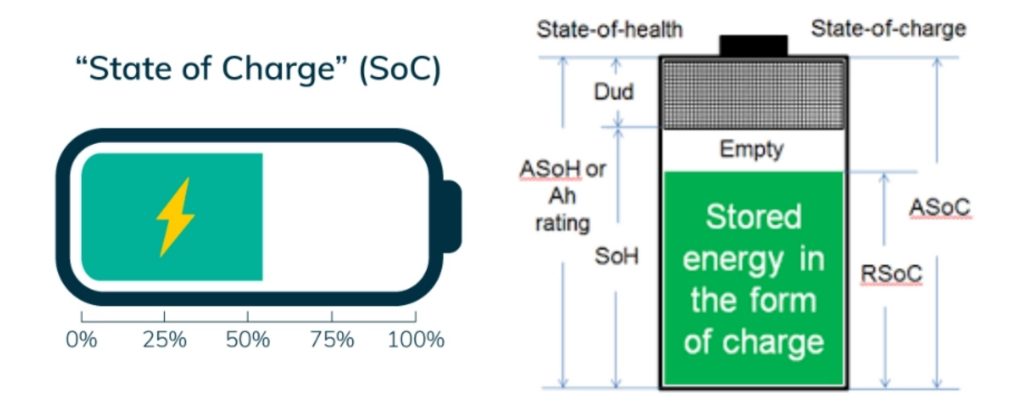
What is State of Charge (SoC)?
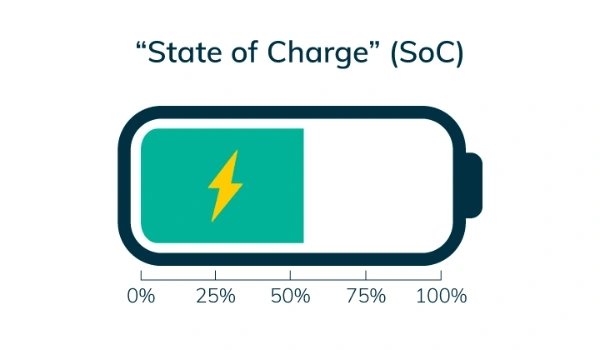
State of Charge (SoC) is a critical parameter in battery management that describes the current charge level of a battery relative to its maximum capacity. It provides valuable insights into the available energy and performance of the battery at a given point in time.
Definition and Formula
SoC is expressed as a percentage, representing the ratio of the remaining charge in the battery (Q0 + Q) to the maximum charge it can hold (Qmax). The formula for calculating SoC is:
SoC (%) = (Q0 + Q) / Qmax × 100
Where:
- Q0 (mAh) is the initial charge of the battery
- Q (mAh) is the quantity of electricity delivered by or supplied to the battery (negative during discharge, positive during charge)
- Qmax (mAh) is the maximum charge that can be stored in the battery
For a new battery, Qmax is equal to the rated capacity (Cr) specified by the manufacturer, and Q0 is typically 50% of Qmax. When the battery is fully charged, Q0 equals Qmax, and SoC reaches 100%.
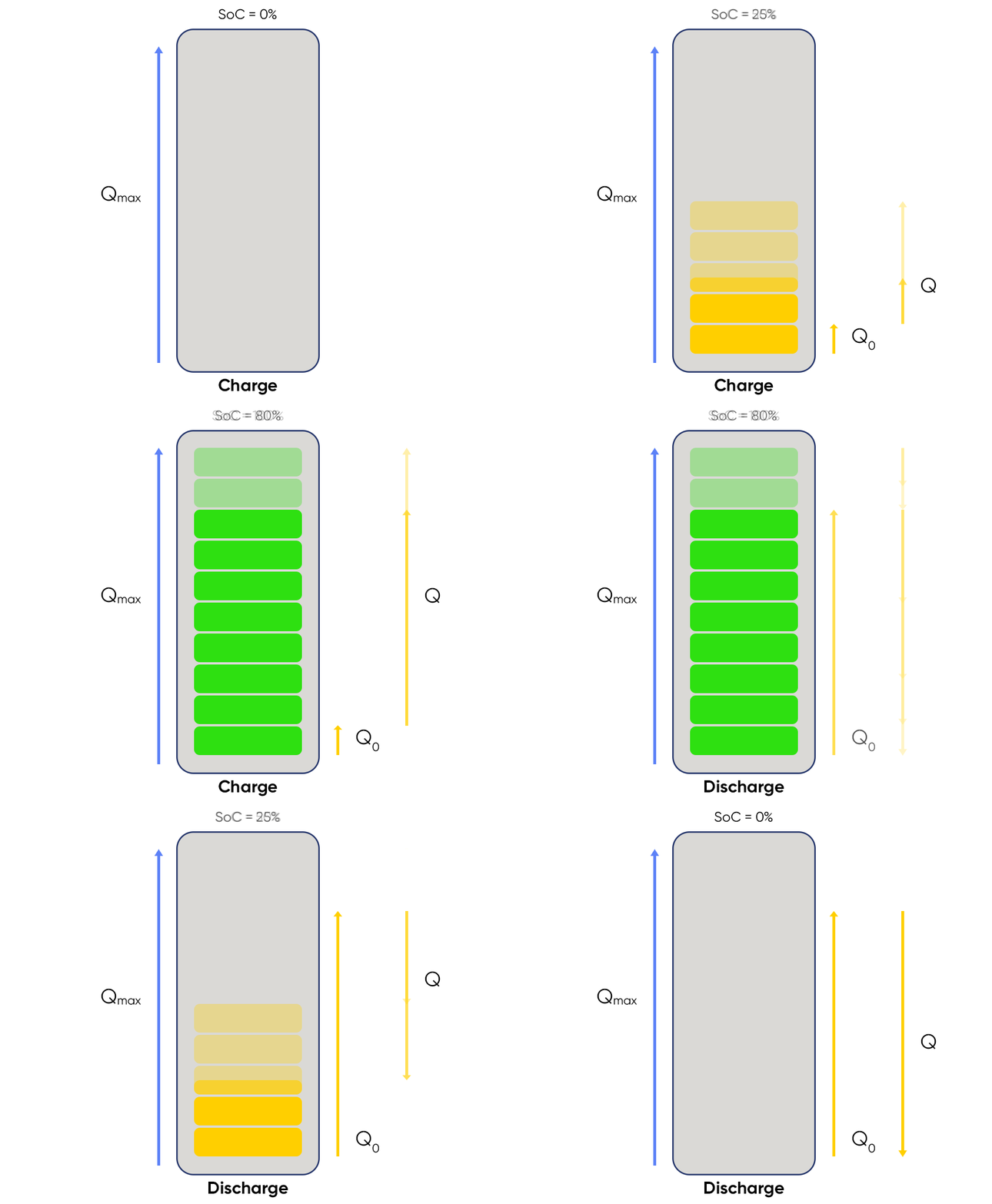
Figure 1: Evolution of the SoC (%) of a battery during charge and discharge
Depth of Discharge (DoD)
Depth of Discharge (DoD) is another way to represent the state of charge, focusing on the percentage of the battery’s capacity that has been discharged. It is calculated as:
DoD (%) = 100 – SoC (%)
Factors Influencing SoC
Several factors can influence a battery’s SoC:
- Charge/Discharge Rate: Higher rates of charging or discharging can impact the battery’s efficiency and heat generation, affecting the SoC.
- Temperature: Extreme temperatures, both high and low, can alter the battery’s capacity and SoC. High temperatures accelerate aging, while low temperatures temporarily reduce available capacity.
- Age: As batteries age, their maximum capacity decreases, impacting SoC calculations and available runtime.
Methods of Measuring SoC
There are several methods used to measure and estimate a battery’s SoC:
- Coulomb Counting Method:
- Measures the current flowing into or out of the battery over time
- Offers high accuracy when the initial SoC is known
- Tracks changes effectively
- Susceptible to error accumulation and requires a known starting point
- Voltage Method:
- Estimates SoC based on the battery’s voltage levels
- Simple and low-cost to implement
- Accuracy affected by factors such as battery type, temperature, and load
- Kalman Filter Method:
- Advanced technique using Kalman filtering algorithms
- Combines multiple measurement inputs to improve accuracy
- Offers high precision but is more complex and computationally intensive
Importance of SoC Monitoring
Monitoring SoC is crucial for various reasons:
- Battery Protection: Keeping SoC within safe limits prevents overcharging and deep discharging, which can damage the battery.
- Performance Optimization: Maintaining an optimal SoC range maximizes battery performance and lifespan.
- Reliability: Accurate SoC estimation enables reliable operation and runtime prediction for battery-powered devices.
- Energy Utilization: In applications like electric vehicles and grid storage, SoC monitoring allows for efficient energy management and utilization.
What is State of Health (SoH)?
State of Health (SoH) is a vital metric that indicates the current condition of a battery compared to its original state when it was new. It provides valuable insights into the battery’s aging, degradation, and remaining useful life.
Definition and Expression
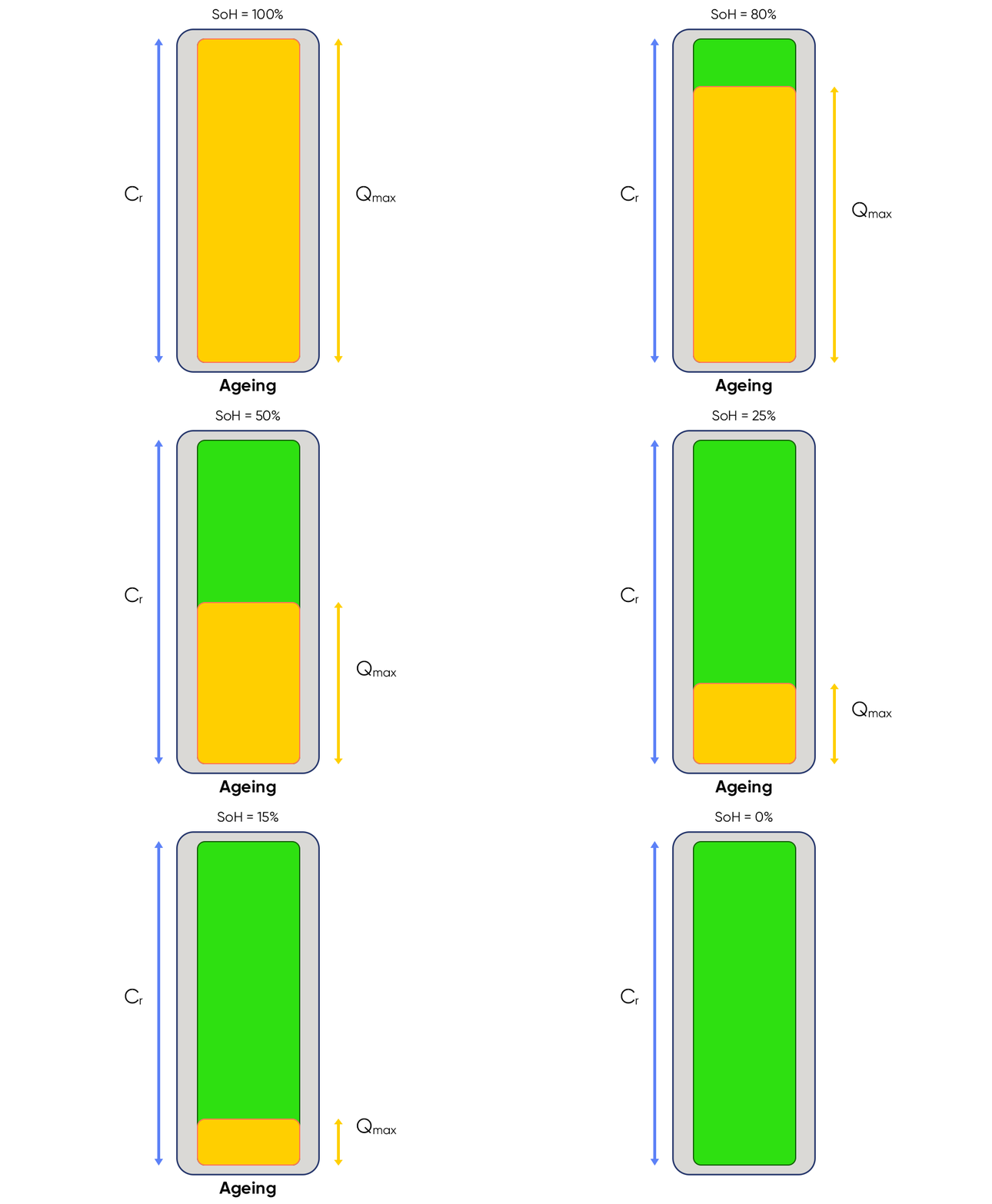
SoH is defined as the ratio of a battery’s current maximum charge capacity to its initial rated capacity. It is typically expressed as a percentage, where 100% represents a brand-new battery in perfect condition.
For example, if a battery originally had a rated capacity of 1000 mAh but can now only hold a maximum of 800 mAh, its SoH would be:
SoH (%) = (Current max capacity / Initial rated capacity) × 100 = (800 mAh / 1000 mAh) × 100 = 80%
Battery Aging and Degradation
As batteries age and undergo repeated charge-discharge cycles, their capacity to store energy diminishes. This degradation is reflected in the SoH, which decreases over time. A lower SoH indicates that the battery has experienced more wear and tear and may not perform as well as it did when it was new.
The impacts of a reduced SoH include:
- Decreased performance and runtime
- Reduced reliability and increased risk of failure
- Potential safety issues, such as overheating or short-circuiting
Factors Affecting SoH
Several factors can influence a battery’s SoH:
- Age of the Battery:
- Even without usage, batteries naturally degrade over time.
- Capacity fade and internal resistance increase as the battery ages.
- Number of Charge-Discharge Cycles:
- Repeated cycling puts stress on the battery’s components.
- Higher cycle counts accelerate the aging process and reduce SoH.
- Operating Temperature and Environment:
- Exposure to extreme temperatures, both hot and cold, can harm battery health.
- Each battery chemistry has an optimal temperature range for best performance and longevity.
- Storage Conditions and Maintenance:
- Proper storage at recommended voltage levels and temperatures helps preserve SoH.
- Regular maintenance, such as conditioning cycles, can help maintain battery health.
Methods of Assessing SoH
There are several methods used to assess a battery’s SoH:
- Capacity Testing:
- Measures the actual maximum charge capacity and compares it to the original rating.
- Involves fully charging and discharging the battery under controlled conditions.
- The capacity fade percentage is interpreted as an indicator of SoH.
- Internal Resistance Measurement:
- There is a correlation between increasing internal resistance and SoH degradation.
- Techniques like AC impedance and DC load testing are used to measure resistance.
- The resistance increase is evaluated against initial specifications or predetermined thresholds.
- Self-Discharge Rate:
- Self-discharge refers to the gradual loss of charge over time when the battery is not in use.
- Higher self-discharge rates can indicate a compromised SoH.
- Methods are employed to quantify and interpret self-discharge behavior.
Importance of SoH Monitoring
Monitoring SoH is crucial for several reasons:
- Predictive Maintenance: Knowing the SoH helps predict the remaining useful life of a battery and plan for replacements before failures occur.
- Charge Optimization: Adjusting charge parameters and limits based on SoH can help prolong battery life and prevent overcharging or deep discharging.
- Safety and Reliability: Identifying anomalous aging patterns and potential safety issues early on can prevent accidents and ensure reliable operation.
- Warranty and Maintenance: SoH data enables condition-based maintenance and validates warranty claims based on actual battery health.
Relationship Between SoC and SoH
State of Charge (SoC) and State of Health (SoH) are closely connected. How a battery is charged and discharged directly affects its long-term health. Poor SoC management accelerates degradation, while controlled charging extends lifespan.

How SoC Management Impacts Long-Term SoH
- Consistent overcharging raises internal temperature, damaging electrolytes.
- Deep discharging stresses active materials, leading to faster capacity loss.
- Frequent extreme SoC swings weaken battery chemistry over time.
- Optimal SoC range (20%-80%) minimizes stress, preserving SoH.
SoC Impact on SoH Over Time
| SoC Range | Effect on Battery Life | Impact on SoH |
|---|---|---|
| 0-10% | Severe degradation | High stress on electrodes |
| 10-20% | Moderate damage | Increased internal resistance |
| 20-80% | Optimal range | Slower aging, extended SoH |
| 80-100% | Heat buildup | Risk of lithium plating, SoH loss |
Cumulative Effects of SoC Extremes
Repeatedly subjecting a battery to overcharge, deep discharge, or wide SoC swings can have cumulative detrimental effects on its SoH.
- Overcharge: Charging a battery beyond its maximum capacity can lead to increased internal resistance, reduced capacity, and potential safety hazards like overheating or gassing.
- Deep Discharge: Discharging a battery to extremely low levels (e.g., below 20% SoC) can cause irreversible capacity loss and accelerate aging.
- SoC Swing Range: Frequently cycling a battery between very high and very low SoC levels can put additional stress on its components and shorten its lifespan.
SoH Impact on SoC Accuracy
As a battery ages and its SoH decreases, the accuracy of SoC estimation can be affected. This is because the battery’s capacity and voltage characteristics change over time.
- Capacity fade: As the maximum capacity decreases, the same amount of charge represents a higher percentage of the total capacity, leading to SoC overestimation.
- Voltage shift: The relationship between voltage and SoC can shift due to internal resistance changes, making voltage-based SoC estimation less reliable.

Strategies for Adapting SoC Management
To account for SoH degradation and maintain accurate SoC estimation, battery management systems can employ various strategies:
- SoH-Based SoC Limits: Adjusting the allowable SoC range based on the battery’s current SoH. For example, as SoH decreases, the upper and lower SoC limits may be tightened to avoid overcharge and deep discharge.
- Adaptive SoC Estimation: Using advanced algorithms that consider factors like capacity fade, internal resistance, and temperature to dynamically adjust SoC calculations based on the battery’s current condition.
- Periodic Calibration: Performing full charge-discharge cycles under controlled conditions to recalibrate SoC estimation and update capacity measurements.
- SoH-Aware Charging: Modifying charging profiles and currents based on the battery’s SoH to minimize stress and optimize charging efficiency.
Challenges in SoC and SoH Measurement
Accurately measuring State of Charge (SoC) and State of Health (SoH) is challenging. Several factors impact precision, including temperature fluctuations, battery aging, and lack of standardization. Understanding these challenges helps improve monitoring and battery management strategies.
Impact of Temperature
Temperature directly affects battery performance and measurement accuracy.
- High temperatures → Increase chemical reactions, altering voltage readings.
- Low temperatures → Slow ion movement, leading to inaccurate SoC estimates.
- Rapid temperature shifts → Cause inconsistencies in SoH degradation tracking.
Example: Temperature Impact on Battery Performance
| Temperature (°C) | Effect on Battery | SoC/SoH Accuracy |
|---|---|---|
| -10°C | Reduced capacity, slow charging | Low |
| 25°C (Optimal) | Stable performance | High |
| 50°C | Increased aging, overheating risk | Medium |
Battery Aging and Degradation
As batteries age, SoC and SoH measurements become less reliable.
- Capacity fade → Batteries store less energy, affecting SoC estimates.
- Increased resistance → Voltage-based SoC calculations become inaccurate.
- Irregular discharge patterns → Older batteries may show unpredictable SoH drops.
Signs of Aging Batteries Affecting SoC/SoH
✔ Frequent recalibration needed
✔ Increased self-discharge rate
✔ Inconsistent voltage readings
Lack of Standardization
Different battery types require different measurement techniques.
- Lithium-ion vs. Lead-acid → SoC estimation varies due to voltage response differences.
- Electric Vehicles vs. Consumer Electronics → Require customized SoH monitoring.
- Inconsistent industry standards → No universal method for precise SoC/SoH tracking.
Best Practices for Maintaining SoC and SoH
To ensure optimal battery performance, longevity, and safety, it is crucial to follow best practices for maintaining State of Charge (SoC) and State of Health (SoH). By implementing these strategies, battery users can maximize the useful life of their batteries and minimize the risk of premature failure.
1. Regular SoC and SoH Monitoring
Consistent monitoring of SoC and SoH is essential for effective battery management. Battery Management Systems (BMS) play a vital role in this process.
Key functions of a BMS include:
- Measuring and reporting SoC and SoH
- Protecting against overcharge, deep discharge, and other hazardous conditions
- Balancing cell voltages within a battery pack
- Communicating battery status to user interfaces and external systems
By regularly monitoring SoC and SoH, users can:
- Optimize battery performance and efficiency
- Detect and address potential issues early on
- Plan for timely battery replacements
- Ensure safe and reliable operation
2. Optimized Charging Profiles
Proper charging practices are essential for maintaining healthy SoC and SoH. Optimized charging profiles help minimize stress on the battery and prevent degradation.
Best practices for charging include:
- Using manufacturer-recommended charging currents and voltages
- Avoiding overcharging by setting appropriate upper SoC limits (e.g., 80-90%)
- Minimizing time spent at high SoC levels
- Employing charge termination and trickle charging methods
Limiting SoC extremes, both high and low, can significantly extend battery life. Depth of Discharge (DoD) should also be managed, with a recommended range of 20-80% for most applications.
3. Thermal Management
Temperature has a significant impact on battery performance and lifespan. Excessive temperatures, both high and low, can accelerate degradation and compromise safety.
Effective thermal management strategies include:
- Maintaining batteries within optimal temperature ranges (e.g., 20-25°C)
- Using insulation and active cooling/heating systems to regulate temperature
- Monitoring and controlling charge/discharge rates to minimize heat generation
- Providing adequate ventilation and spacing between cells
4. Proper Storage Conditions
When batteries are not in use, proper storage conditions are crucial for preserving SoC and SoH. Long-term storage at improper voltages or temperatures can lead to irreversible capacity loss and degradation.
Best practices for battery storage include:
- Storing batteries at a partially charged state (e.g., 40-50% SoC)
- Avoiding storage at extreme SoC levels (full charge or complete discharge)
- Maintaining a cool, dry storage environment (e.g., 10-25°C, low humidity)
- Regularly checking and adjusting battery voltage during extended storage
5. Scheduled Maintenance and Calibration
Regular maintenance and calibration are essential for ensuring accurate SoC and SoH measurements and optimizing battery performance.
Key maintenance tasks include:
- Visual inspection for signs of damage, leakage, or corrosion
- Cleaning battery terminals and connections
- Checking and tightening battery mounting hardware
- Performing periodic capacity tests and health assessments
Calibration involves fully charging and discharging the battery under controlled conditions to reset SoC tracking and update capacity estimates. This process helps maintain the accuracy of BMS measurements and enables early detection of capacity fade.
Future of SoC and SoH Monitoring
Battery technology is evolving rapidly, and SoC/SoH monitoring is becoming more precise. AI-driven algorithms, standardized reporting, and IoT integration are reshaping how batteries are managed.
Advanced Machine Learning Algorithms
✔ AI-powered Battery Management Systems (BMS) analyze real-time SoC/SoH data.
✔ Self-learning models predict degradation trends, improving longevity.
✔ Big data analytics enhance charge estimation and fault detection.
AI-Based Battery Monitoring Benefits
| Feature | Benefit |
|---|---|
| Real-time SoC tracking | Immediate accuracy improvements |
| Predictive SoH modeling | Prevents unexpected failures |
| Adaptive charging control | Extends battery lifespan |
Standardized SoH Reporting for Second-Life Batteries
✔ Universal SoH indicators simplify battery resale and reuse.
✔ Second-life battery applications depend on reliable SoH data.
✔ Regulations like California’s Advanced Clean Cars II push for standardized SoH access.
Why Standardization Matters
| Factor | Impact on Battery Industry |
|---|---|
| Transparent SoH ratings | Easier resale, reduced waste |
| Regulatory compliance | Supports safety and performance checks |
| Efficient second-life use | Extends energy storage potential |
Integration with IoT and Smart Grids
✔ IoT-enabled batteries communicate with smart grids for optimal energy distribution.
✔ Cloud-based SoC/SoH tracking allows remote diagnostics.
✔ Predictive energy management adjusts charging based on demand.
Smart Grid & IoT Benefits
| Technology | Impact on Battery Monitoring |
|---|---|
| Remote SoC/SoH tracking | Prevents unexpected failures |
| Automated load balancing | Reduces energy waste |
| Predictive maintenance alerts | Minimizes downtime |
Conclusion
State of Charge (SoC) and State of Health (SoH) are critical for battery performance and longevity. SoC tracks remaining energy, while SoH indicates capacity loss over time.
Effective battery management requires balancing SoC levels, preventing overcharging, and avoiding deep discharge. Monitoring SoH helps predict failures and extend battery life.
AI-driven BMS, IoT integration, and standardized SoH reporting A holistic approach to SoC and SoH management ensures efficiency, safety, and sustainability. Advances in technology will continue refining battery performance and reliability.
Have questions about new energy batteries? Contact Tertron for expert guidance on battery testing, production, and optimization. Get the right solutions for your needs. Reach out today.