
Lithium-ion batteries power everything from smartphones to electric cars. But are they truly safe? Without proper testing, these batteries pose risks like overheating, fires, or even explosions.
Battery testing ensures safety, performance, and long-term reliability. It prevents failures, protects consumers, and meets strict global regulations. Without testing, lithium batteries could become dangerous in daily use and transportation.
In this post, you’ll learn why lithium battery testing matters, the biggest risks involved, and how international standards keep batteries safe for consumers and industries worldwide.

Importance of Lithium Battery Testing
Lithium battery testing is crucial in today’s technology-driven world to ensure the safety, performance, and compliance of these powerful energy sources. Rigorous testing protocols help prevent potential hazards, enhance battery life and efficiency, meet regulatory standards, and maintain quality control in manufacturing.
Ensuring Battery Safety and Preventing Accidents
Lithium batteries store a high amount of energy in a compact space, making safety a top priority. Without proper testing, they can pose severe risks:
- Overheating and Thermal Runaway: A minor defect can trigger a chain reaction, leading to uncontrolled heat buildup.
- Short Circuits: Poor insulation or internal faults may cause dangerous short circuits.
- Overcharging and Over-Discharging: Excess voltage can degrade battery materials and increase fire risk.
🔥 Common Lithium Battery Failures and Their Consequences
| Failure Type | Possible Consequences |
|---|---|
| Thermal Runaway | Fire, explosion, toxic gas release |
| Short Circuit | Sparks, heat damage, cell rupture |
| Overcharging | Internal overheating, battery swelling |
| Mechanical Damage | Leakage, loss of capacity |
Enhancing Battery Performance and Longevity
Battery testing is not only about safety—it also helps manufacturers optimize performance and lifespan. Key tests ensure:
- Higher Energy Efficiency: Prevents unnecessary energy loss due to internal resistance.
- Longer Cycle Life: Ensures batteries maintain performance over thousands of charge cycles.
- Stable Voltage Output: Maintains reliable power for devices, avoiding sudden shutdowns.
🛠 Best Practices for Battery Longevity: ✅ Avoid deep discharges
✅ Use proper thermal management
✅ Follow manufacturer charging guidelines
Regulatory Compliance for Transportation and Consumer Safety
Strict global regulations ensure lithium batteries are safe for use and transport. Compliance with these standards is mandatory:
- UN 38.3 – Ensures safe transportation by testing for altitude, vibration, impact, and short circuits.
- IEC 62133 – Covers general safety requirements for rechargeable lithium batteries.
- UL 1642 – Focuses on electrical and mechanical safety in lithium cells.
📦 Key Transportation Safety Tests (UN 38.3):
- Altitude Simulation
- Thermal Testing
- Impact and Shock Resistance
- External Short Circuit
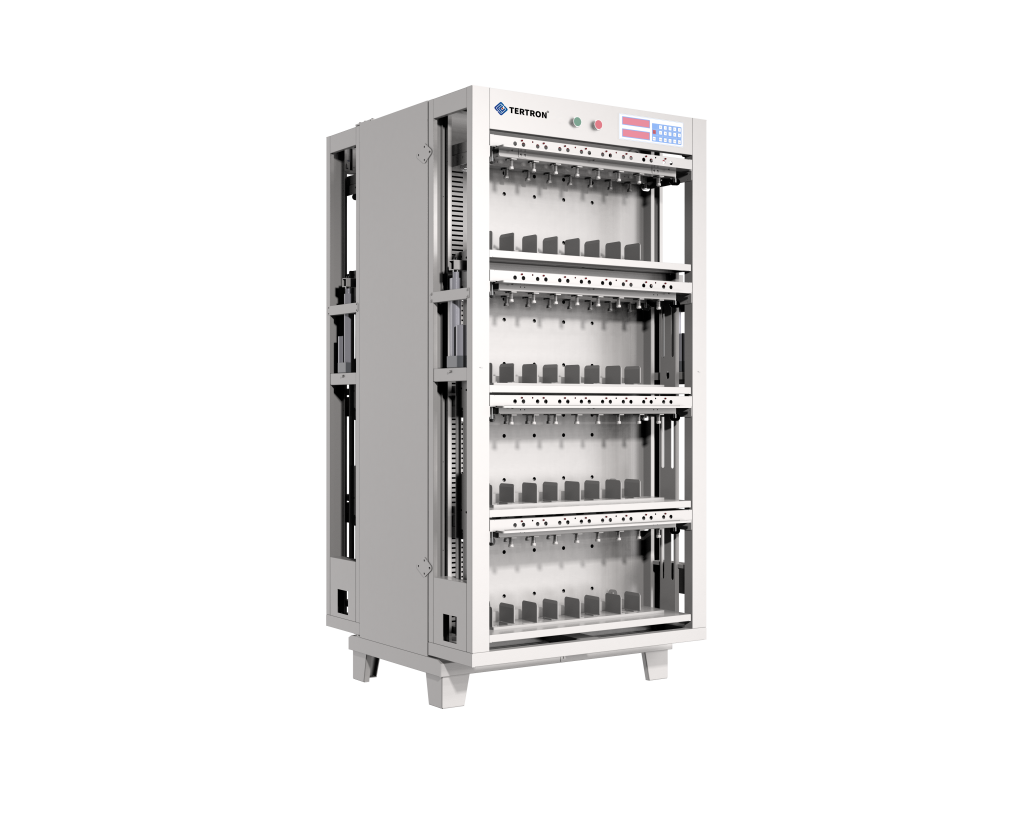
Quality Control in Battery Manufacturing
Lithium battery testing helps identify defects early in production, reducing recalls and ensuring reliability. Quality control measures include:
- Environmental Testing: Assessing performance under temperature and humidity extremes.
- Mechanical Stress Testing: Ensuring resistance to vibrations, drops, and punctures.
- Capacity and Charge Cycle Tests: Verifying long-term efficiency.
🛠 Manufacturing Defects That Testing Helps Detect:
- Internal short circuits
- Poor electrode bonding
- Chemical degradation
Key Types of Lithium Battery Testing
To ensure the safety, performance, and reliability of lithium batteries, a comprehensive testing regime is essential. This testing covers a wide range of electrical, mechanical, and environmental factors that can impact battery operation. Here are the key categories of lithium battery tests:
1. Capacity Testing: Evaluating Energy Storage and Discharge Performance
Capacity testing measures how much charge a battery can store and deliver under controlled conditions. This is crucial in determining the runtime of devices and ensuring consistency across battery units.
🔍 Key Metrics in Capacity Testing:
- Rated Capacity (Ah or Wh) – Measures the total charge a battery can deliver.
- Discharge Rate – Evaluates how fast a battery loses charge under different loads.
- Voltage Stability – Ensures a steady power output.
2. Internal Resistance Testing: Measuring Efficiency and Power Output
Internal resistance testing determines how easily current flows within the battery. High resistance leads to energy loss, heat generation, and reduced efficiency.
📊 Common Causes of High Internal Resistance:
| Cause | Impact on Battery Performance |
|---|---|
| Aging and Degradation | Reduced efficiency, heat buildup |
| Poor Electrode Contact | Power loss, inconsistent voltage |
| Manufacturing Defects | Lower charge acceptance rate |
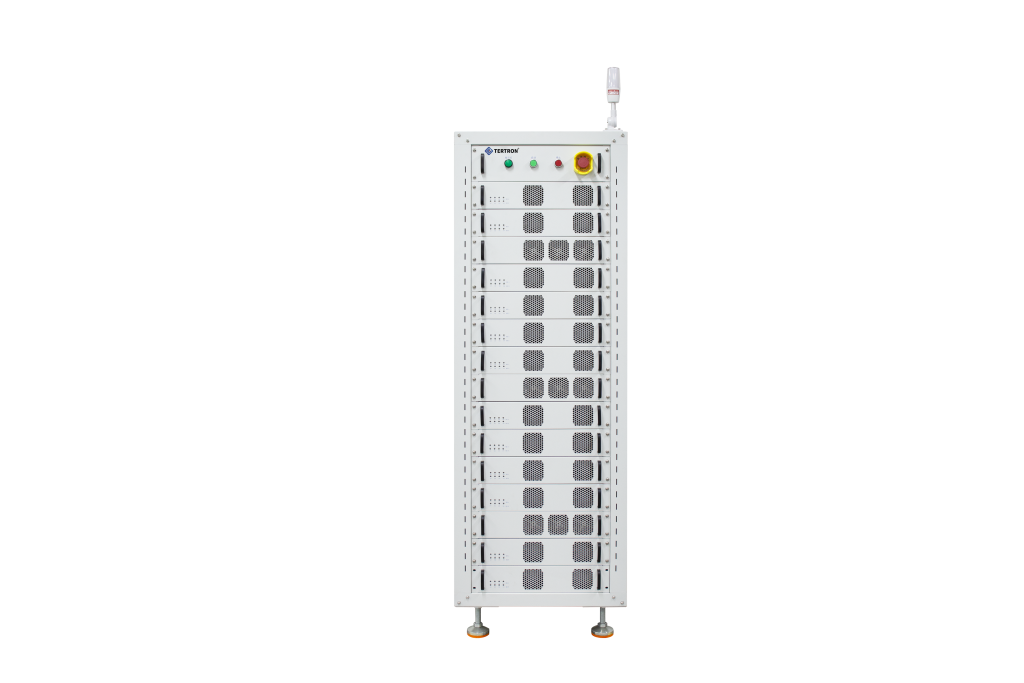
3. Cycle Life Testing: Determining Battery Longevity
This test simulates repeated charge and discharge cycles to estimate how long a battery will last before losing significant capacity.
💡 Factors Affecting Cycle Life:
- Depth of Discharge (DoD) – Deep discharges shorten lifespan.
- Charge Rate – Fast charging may degrade batteries faster.
- Operating Temperature – High heat accelerates wear.
Example: A typical lithium-ion battery might retain 80% of its original capacity after 500–1000 cycles, depending on use conditions.
4. Temperature Testing: Assessing Performance Under Extreme Conditions
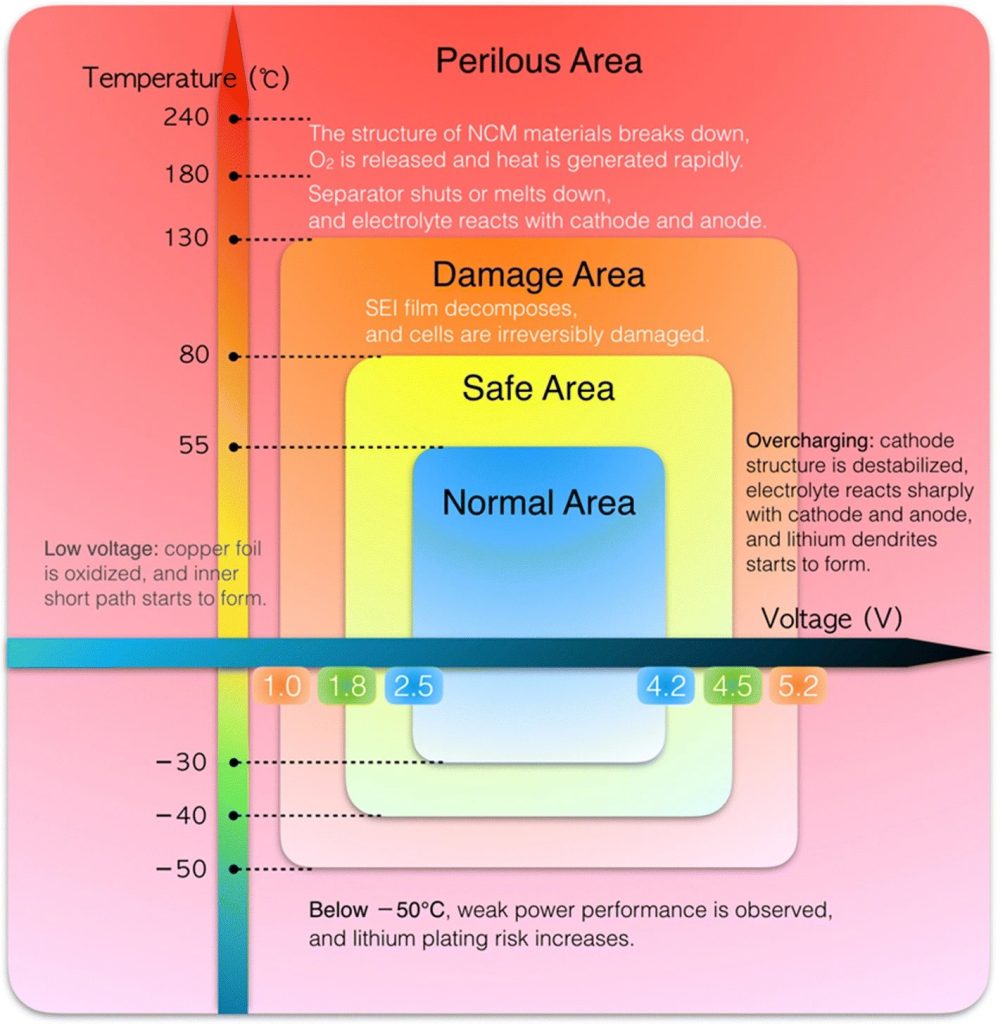
Temperature has a significant impact on battery efficiency, safety, and lifespan. Batteries must function within a safe thermal range to prevent overheating and freezing issues.
🌡️ Temperature Effects on Batteries:
- Cold Environments (-20°C or lower): Reduced capacity and slower charging.
- Hot Environments (Above 50°C): Increased risk of thermal runaway and degradation.
- Rapid Temperature Changes: Structural stress on battery components.
5. Safety Testing: Preventing Overcharging, Short Circuits, and Thermal Runaway
Safety testing is one of the most critical aspects of battery evaluation. It simulates real-world abuse scenarios to ensure batteries do not catch fire, explode, or leak hazardous chemicals.
🚨 Common Safety Tests:
- Overcharge Test: Evaluates what happens when the battery is charged beyond its limit.
- Short Circuit Test: Simulates a direct electrical fault.
- Crush & Impact Test: Ensures batteries can withstand mechanical damage.
- Thermal Runaway Simulation: Assesses potential fire and explosion risks.
6. Environmental Testing: Evaluating Performance Under Extreme Conditions
Batteries are tested under various environmental conditions to ensure they perform reliably in different climates and operational settings.
🛠 Key Environmental Tests:
- Humidity Testing: Checks for moisture-related failures.
- Altitude Simulation: Ensures safety during air transportation (UN 38.3 requirement).
- Temperature Cycling: Rapid shifts between extreme hot and cold conditions.
7. Abuse Testing: Simulating Extreme Conditions
Abuse testing subjects batteries to severe mechanical, thermal, and electrical stress to determine their failure limits. This ensures they fail safely rather than catastrophically.
🔧 Types of Abuse Tests:
- Nail Penetration Test: Simulates internal short circuits.
- Drop Test: Evaluates impact resistance.
- Forced Discharge Test: Simulates energy overload scenarios.
International Lithium Battery Testing Standards
To ensure the safety, performance, and consistency of lithium batteries across various applications and regions, several international standards have been developed by organizations such as the International Electrotechnical Commission (IEC), Underwriters Laboratories (UL), United Nations (UN), Society of Automotive Engineers (SAE), and International Organization for Standardization (ISO). These standards provide guidelines for testing lithium batteries under different conditions and set benchmarks for compliance. Here are some of the key international lithium battery testing standards:
IEC 62133
IEC 62133 is a widely recognized standard that specifies safety requirements for rechargeable lithium-ion batteries used in portable applications. It covers both nickel and lithium chemistries, with separate parts for each (IEC 62133-1 for nickel and IEC 62133-2 for lithium). The standard includes tests for:
- Electrical safety
- Mechanical integrity
- Environmental exposure
- Thermal abuse
Recent updates to IEC 62133-2 have introduced changes such as single fault conditions and adjustments to test conditions and requirements.
UN 38.3
UN 38.3 is a global standard that outlines the transportation testing requirements for lithium batteries to ensure their safe transport by air, sea, and land. This standard is recognized by regulatory and customs authorities worldwide and serves as a gateway for accessing international markets. The UN 38.3 testing regime comprises a series of eight tests (T1-T8) that evaluate the battery’s stability under simulated transport conditions:
| Test | Description |
|---|---|
| T1 | Altitude simulation |
| T2 | Thermal test |
| T3 | Vibration |
| T4 | Shock |
| T5 | External short circuit |
| T6 | Impact |
| T7 | Overcharge |
| T8 | Forced discharge |
UL Standards
Underwriters Laboratories (UL) has developed several standards for lithium battery safety:
- UL 1642: Covers safety of lithium battery cells used in electronic products. It sets limits on lithium content and addresses risks such as fire, explosion, and toxic gas release.
- UL 2054: Focuses on safety of household and commercial batteries, including lithium-ion. It includes tests for short circuit, overcharge, and mechanical abuse.
- UL 2580: Addresses safety requirements for batteries used in electric vehicles (EVs). It includes tests for short circuit, crush, and cell crush, with criteria for explosion, fire, gas venting, rupture, and leakage.
IEC 62619
IEC 62619 specifies safety requirements for secondary (rechargeable) lithium batteries used in industrial applications, including stationary and motive power. It covers applications such as:
- Telecom and utility backup power
- Energy storage systems
- Forklifts and automated guided vehicles (AGVs)
- Railway and marine systems
SAE J2464
SAE J2464 is a standard developed by the Society of Automotive Engineers (SAE) for safety and abuse testing of rechargeable energy storage systems (RESS) used in electric and hybrid vehicles. It includes tests for thermal stability, mechanical shock, and short circuit, among others.
ISO 12405
ISO 12405 is a series of standards developed by the International Organization for Standardization (ISO) for testing the safety and performance of lithium-ion batteries used in electric vehicles. It includes tests for electrical performance, mechanical integrity, and environmental durability.
ECE R100
ECE R100 is a European regulation that sets safety requirements for rechargeable energy storage systems (RESS) used in electric vehicles. It includes tests for vibration, thermal shock, mechanical integrity, fire resistance, and protection against short circuit, overcharge, and overheating.
These international standards provide a comprehensive framework for evaluating the safety and performance of lithium batteries across diverse applications and operating conditions. By adhering to these standards, manufacturers can ensure their batteries meet global expectations for quality, reliability, and safety.
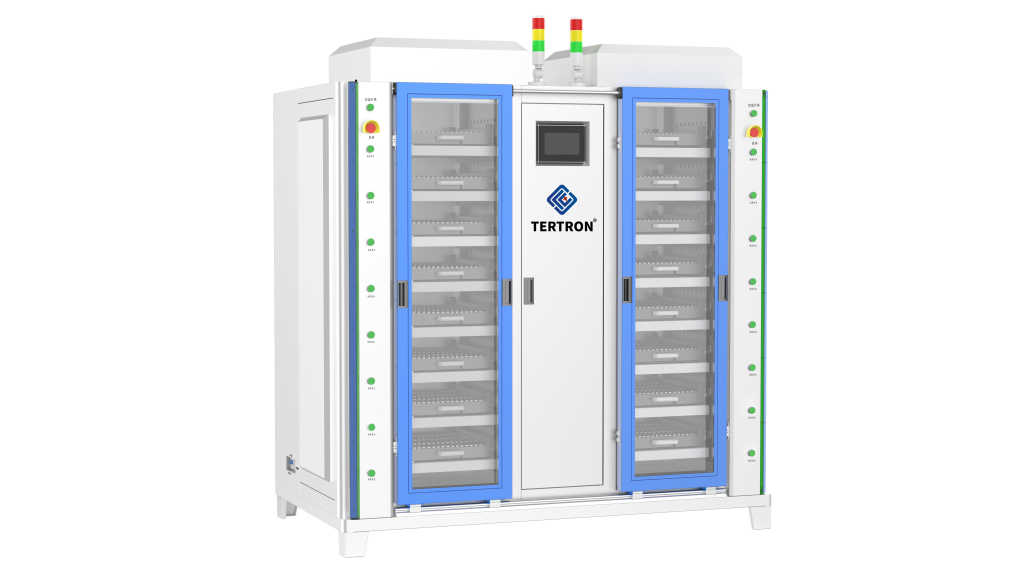
Key Battery Testing Procedures
To ensure the safety, performance, and reliability of lithium batteries, various testing procedures have been established by international standards organizations. These tests simulate real-world conditions and potential hazards that batteries may encounter during transportation, use, and abuse scenarios. Here are some of the key testing procedures outlined in major lithium battery standards:
UN 38.3 Testing for Battery Transportation
UN 38.3 is a critical standard for ensuring the safe transport of lithium batteries by air, sea, and land. It consists of a series of eight tests that evaluate the battery’s ability to withstand conditions encountered during transportation:
- Altitude simulation: Tests the battery’s integrity under low-pressure conditions equivalent to high altitudes.
- Thermal test: Assesses the battery’s performance and safety under extreme temperature conditions, ranging from -40°C to 75°C.
- Vibration resistance: Evaluates the battery’s ability to withstand vibration levels typical of transportation environments.
- Shock test: Simulates the impact of rough handling during loading and unloading.
- Impact test: Determines the battery’s resistance to mechanical damage from a specified impact force.
- External short circuit: Verifies the battery’s safety when subjected to a short circuit condition.
- Overcharge test: Assesses the battery’s response to charging beyond its specified limits.
- Forced discharge test: Evaluates the battery’s safety when discharged below its minimum voltage threshold.
IEC 62133 Testing for Portable Batteries
IEC 62133 is a widely adopted standard for safety testing of rechargeable lithium-ion batteries used in portable applications. Some of the key tests included in this standard are:
- Overcharging and over-discharging assessments: Evaluate the battery’s safety when subjected to charging and discharging beyond its specified limits.
- Thermal abuse and temperature cycling: Assess the battery’s performance and safety under extreme temperature conditions and rapid temperature changes.
- Short circuit resistance: Verifies the battery’s ability to withstand short circuit conditions without causing fire or explosion.
- Mechanical shock and vibration resistance: Determine the battery’s durability when subjected to mechanical stresses typical of portable device use.
UL 2580 Testing for Electric Vehicle Batteries
UL 2580 is a safety standard specifically designed for batteries used in electric vehicles (EVs). It includes several critical tests to ensure the battery’s safety and performance under automotive conditions:
| Test | Description |
|---|---|
| Large current short circuit | Evaluates the battery’s response to a high-current short circuit, simulating a catastrophic failure. |
| Battery crush test | Simulates the impact of a vehicle crash on the battery pack, assessing its integrity and safety. |
| Battery cell crush test | Determines the individual battery cell’s resistance to mechanical crush forces. |
SAE J2464 Abuse Testing
SAE J2464 is a standard developed by the Society of Automotive Engineers (SAE) for abuse testing of rechargeable energy storage systems (RESS) used in electric and hybrid vehicles. Some of the key tests in this standard include:
- Thermal stability test: Evaluates the battery’s safety and performance at elevated temperatures, simulating extreme operating conditions.
- Rapid temperature cycling: Assesses the battery’s durability when subjected to rapid temperature changes, mimicking real-world automotive environments.
- Crash and impact simulation: Determines the battery’s integrity and safety during simulated vehicle crash scenarios.
📌 Summary of Key Battery Testing Procedures
| Test Standard | Application | Key Tests |
|---|---|---|
| UN 38.3 | Battery Transportation | Altitude, thermal, vibration, impact, short circuit, overcharge |
| IEC 62133 | Consumer & Portable Batteries | Overcharging, short circuit, thermal cycling, vibration |
| UL 2580 | Electric Vehicles | Short circuit, crush impact, thermal runaway |
| SAE J2464 | EV Abuse Testing | Thermal stability, rapid cycling, crash simulation |
The Role of Quality Control in Battery Testing
Quality control plays a critical role in lithium battery testing, ensuring that batteries meet performance, durability, and safety standards before they reach consumers. Rigorous quality control processes identify defects, enhance battery longevity, and prevent hazardous failures such as overheating or explosions. Below, we explore the key aspects of quality control in battery testing.
🔹 Battery Performance Testing: Ensuring Real-World Reliability
Performance testing evaluates how well a battery operates under real-world usage conditions. This ensures that batteries meet energy efficiency, power output, and longevity expectations across various applications, from smartphones to electric vehicles.
📊 Key Factors in Battery Performance Testing:
- Energy Capacity – Verifies if the battery delivers the expected charge over multiple cycles.
- Charge & Discharge Efficiency – Measures energy retention and discharge stability.
- Voltage Consistency – Ensures steady power output without fluctuations.
🔧 Why It Matters:
Reliable battery performance enhances user experience, device efficiency, and product lifespan.
🔹 Environmental Testing: Assessing Durability Under Harsh Conditions
Lithium batteries must perform consistently across different environments, from freezing cold to extreme heat. Environmental testing subjects batteries to climate variations, humidity, and pressure conditions to ensure reliability.
🌡️ Common Environmental Tests:
| Test Type | Purpose |
|---|---|
| Temperature Cycling | Simulates battery response to rapid temperature shifts. |
| High Humidity Testing | Evaluates how moisture affects battery internal components. |
| Altitude Simulation | Ensures batteries remain stable at high altitudes (important for air transportation). |
📌 Why It Matters:
This testing prevents premature failure, ensuring batteries remain functional in extreme conditions.
🔹 Abuse Testing: Simulating Extreme Stress Conditions
Abuse testing pushes batteries to their limits, ensuring they remain safe under physical, electrical, and thermal stress. This type of testing is crucial for automotive, aerospace, and industrial applications.
⚠️ Key Abuse Tests:
- Crush & Impact Testing – Simulates mechanical damage from drops or collisions.
- Overcharge & Short Circuit Testing – Prevents thermal runaway leading to fires or explosions.
- Forced Discharge Testing – Ensures batteries can handle excessive energy depletion safely.
🚗 Why It Matters:
Abuse testing is especially vital for electric vehicles (EVs), ensuring safety in case of accidents.
🔹 Defect Identification: Reducing Failures Through Early Detection
Early defect detection prevents faulty batteries from reaching consumers, reducing risks and minimizing costly recalls.
🔍 Common Battery Defects Identified: ✅ Internal Short Circuits – Caused by manufacturing errors or contamination.
✅ Electrode Degradation – Leads to capacity loss over time.
✅ Seal & Insulation Issues – Results in leakage or swelling.
💡 Advanced Detection Methods:
- X-ray Inspection – Detects internal structural flaws.
- Electrochemical Testing – Identifies chemical imbalances.
- Thermal Imaging – Finds potential hotspots that indicate early failure.
🔧 Why It Matters:
Defect identification ensures only high-quality batteries reach the market, reducing safety risks and product failures.
Lithium-Ion Battery Safety Considerations
While lithium-ion batteries (LIBs) offer numerous advantages in terms of energy density and performance, they also present unique safety challenges that must be carefully managed. One of the most significant risks associated with LIBs is thermal runaway, a rapid and uncontrolled increase in temperature that can lead to fire, explosion, and the release of toxic gases. To mitigate these risks, rigorous testing methods and safety precautions are essential.
Thermal Runaway Risks
Thermal runaway can occur in LIBs due to a variety of factors, including:
- Mechanical damage: Physical deformation or penetration of the battery cell can cause internal short circuits and heat generation.
- Overcharging: Charging beyond the specified voltage limit can lead to the breakdown of electrode materials and electrolyte decomposition.
- High temperatures: Exposure to elevated temperatures can accelerate degradation reactions and increase the risk of thermal runaway.
The consequences of thermal runaway can be severe, ranging from localized fires to catastrophic explosions and the release of toxic gases such as carbon monoxide and hydrogen fluoride.
Testing Methods to Prevent Thermal Runaway
To minimize the risk of thermal runaway, LIBs must undergo extensive safety testing during development and manufacturing. Some key testing methods include:
- Heat resistance evaluation: Batteries are subjected to elevated temperatures (typically up to 150°C) to assess their ability to withstand thermal stress without catastrophic failure.
- Short circuit and overcharge tests: Cells are intentionally short-circuited or overcharged to evaluate the effectiveness of safety mechanisms like current interrupt devices (CIDs) and positive temperature coefficient (PTC) switches.
- Environmental stress simulations: Batteries are exposed to a range of environmental conditions, such as vibration, shock, and extreme temperatures, to ensure they can operate safely under real-world stresses.
These tests help identify potential failure modes and validate the robustness of battery designs and safety features.
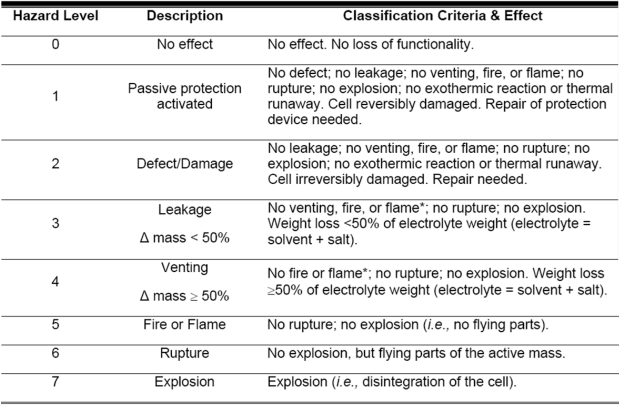
LIB Hazard Levels
The European Council for Automotive R&D (EUCAR) has defined a classification system for LIB hazard levels based on factors such as voltage, temperature, and potential for damage. This system helps guide the selection of appropriate safety measures and testing protocols:
| Hazard Level | Description | Potential Effects |
|---|---|---|
| 0 | No effect | No loss of functionality |
| 1 | Passive protection activated | No defect; no leakage, fire, flame, or rupture |
| 2 | Defect or damage | No leakage, fire, flame, or rupture; possible loss of functionality |
| 3 | Leakage or venting | No fire, flame, or rupture; possible loss of functionality |
| 4 | Fire or flame | No rupture; possible loss of functionality |
| 5 | Rupture | Possible loss of functionality |
| 6 | Explosion | Possible loss of functionality |
| 7 | Explosion with projectiles | Possible loss of functionality |
As the hazard level increases, more stringent safety precautions and testing requirements come into play. For high-risk scenarios (levels 4-7), the use of specialized protective enclosures and fire-resistant testing chambers is crucial to ensure the safety of personnel and facilities.
Emerging Trends in Battery Testing
As battery technologies continue to evolve, testing methods and standards must keep pace to ensure the safety, performance, and reliability of new chemistries and designs. From solid-state electrolytes to high-energy-density cathodes, emerging battery innovations are driving advancements in testing procedures and equipment. Here are some of the key trends shaping the future of battery testing:
Advancements in Solid-State Battery Testing
Solid-state batteries, which replace traditional liquid electrolytes with solid materials, offer the potential for improved safety, higher energy density, and longer cycle life. However, these new designs also present unique testing challenges, such as:
- Evaluating the mechanical properties and stability of solid electrolytes
- Assessing the interfacial compatibility between electrodes and electrolytes
- Characterizing the ionic conductivity and transport mechanisms in solid-state systems
New testing techniques, such as in-situ microscopy and spectroscopy, are being developed to better understand and optimize solid-state battery performance.
New High-Energy-Density Batteries
The push for longer-lasting and more powerful batteries has led to the development of new high-energy-density chemistries, such as lithium-sulfur (Li-S) and lithium-air (Li-air) systems. These batteries pose unique testing challenges due to their complex reaction mechanisms and potential for side reactions. Key testing considerations include:
- Evaluating the stability and reversibility of sulfur and oxygen cathodes
- Assessing the impact of electrolyte composition on cycle life and efficiency
- Monitoring the formation and evolution of discharge products, such as lithium peroxide (Li2O2)
Advanced analytical techniques, such as X-ray absorption spectroscopy and mass spectrometry, are being employed to gain deeper insights into the behavior of these high-energy-density systems.
Wearable Battery Testing Innovations
The growing demand for wearable electronics, such as smartwatches and fitness trackers, has driven the development of flexible, thin-film batteries that can conform to the shape of the human body. Testing these unconventional battery designs requires new approaches that account for their unique mechanical and electrochemical properties:
| Testing Aspect | Wearable Battery Considerations |
|---|---|
| Mechanical Durability | Evaluating flexibility, stretchability, and resistance to repeated bending |
| Electrochemical Performance | Assessing capacity, rate capability, and cycle life under dynamic loading conditions |
| Safety | Ensuring the battery remains stable and non-toxic in close contact with the skin |
Specialized testing equipment, such as flexible testing jigs and simulated wear testing machines, are being developed to accurately characterize the performance of wearable batteries.
Next-Generation Flow Batteries
Flow batteries, which store energy in external liquid electrolyte tanks, offer the potential for large-scale, long-duration energy storage. As new flow battery chemistries and designs emerge, testing methods must adapt to evaluate their unique performance characteristics:
- Assessing the stability and compatibility of novel redox couples and electrolyte compositions
- Evaluating the efficiency and durability of ion-exchange membranes and electrodes
- Characterizing the rheological properties and flow behavior of electrolytes
In-line monitoring techniques, such as UV-Vis spectroscopy and potentiometric titration, are being employed to track the state of charge and health of flow battery systems in real-time.
Wireless Charging and Its Impact on Battery Safety Testing
The proliferation of wireless charging technologies, such as Qi and AirFuel, has introduced new safety considerations for battery testing. Wireless charging can potentially generate additional heat and electromagnetic interference (EMI) that may impact battery performance and safety. Key testing aspects include:
- Evaluating the thermal management and temperature rise during wireless charging
- Assessing the impact of EMI on battery performance and protective circuits
- Ensuring compatibility with wireless charging standards and protocols
Testing facilities must be equipped with specialized wireless charging equipment and shielded environments to accurately evaluate the safety and performance of batteries under wireless charging conditions.
Conclusion
Lithium battery testing is crucial for safety, performance, and reliability. Multi-standard testing prevents fires, explosions, and failures, ensuring compliance with global regulations.
As battery technology evolves, standards must adapt to address solid-state, high-energy-density, and wearable batteries. New challenges require advanced safety protocols and testing methods.
Comprehensive testing covers electrical, mechanical, and environmental factors, ensuring batteries perform safely under real-world conditions. Continuous innovation in testing will support the future of energy storage and mobility.
Interested in lithium battery testing and standards? Contact Tertron for reliable battery production and testing solutions. Get expert guidance on equipment for aging, formation, and spot welding. Ensure your batteries meet industry standards. Reach out today for more information!