
Did you know the wrong battery choice can ruin your weekend trip? Imagine arriving at your campsite with a dead RV battery. Avoiding frustration starts with picking the right battery.
Two popular choices are 12V STD and 12V AGM batteries. Understanding their differences ensures reliable performance for your vehicle or device.
In this post, you’ll learn how STD and AGM batteries differ in cost, maintenance, and reliability. You’ll discover exactly which battery best fits your needs.
What is a 12V STD Battery?
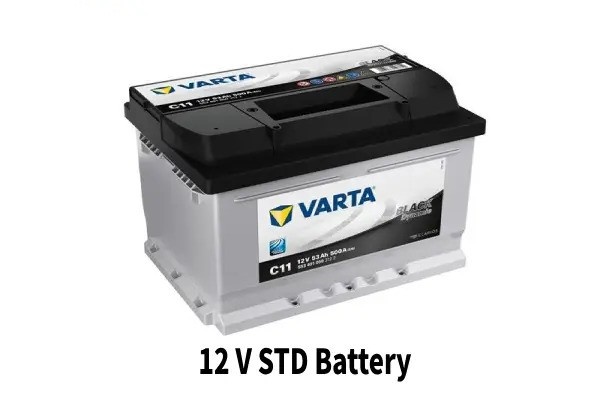
A 12V STD battery, commonly known as a standard 12-volt lead-acid battery, powers countless vehicles and machines worldwide. Its simple yet durable design consists of a positive plate made of lead dioxide (PbO₂), a negative plate of sponge lead (Pb), and sulfuric acid (H₂SO₄) as the electrolyte. These batteries have reliably powered cars, boats, and backup generators for decades, making them an affordable and popular choice.

How 12V STD Batteries Work
The 12V STD battery generates electricity through chemical reactions. When you use the battery, sulfuric acid reacts with the lead plates, creating electrical energy. Charging reverses this reaction, restoring the battery for future use. This straightforward process makes STD batteries dependable and efficient.
Pros and Cons of 12V STD Batteries
Here’s a quick overview:
| Pros | Cons |
|---|---|
| ✅ Budget-friendly and widely available | ⚠️ Regular maintenance needed (water checks, cleaning) |
| ✅ Reliable, consistent power delivery | ⚠️ Risk of electrolyte leakage and spills |
| ✅ High cranking power, ideal for vehicles | ⚠️ Slower recharge speed compared to newer batteries |
| ✅ Easily replaceable and maintainable parts | ⚠️ Shorter lifespan than lithium or AGM batteries |
| ⚠️ Heavy and bulky |
Standard lead-acid batteries are great if you’re budget-conscious and don’t mind regular maintenance. However, their bulky size and maintenance requirements might not suit everyone, especially those seeking convenience or using modern, energy-intensive applications.
What is a 12V AGM Battery?
A 12V AGM (Absorbent Glass Mat) battery is a modern, high-performance alternative to traditional lead-acid batteries. Its unique design features an electrolyte absorbed into a fiberglass mat separator, which offers several benefits:
- Spill-proof construction, making it safer and more versatile
- Improved efficiency and performance compared to standard batteries
- Maintenance-free operation, as there is no need to top up the electrolyte
12V AGM Battery Structure and Function
The key difference in the structure of a 12V AGM battery lies in how the electrolyte is stored:
- The lead plates are soaked in an immobilized electrolyte, held in place by the fiberglass mat.
- This design allows for faster charging and deeper discharges without damaging the battery.
- AGM batteries are ideal for powering demanding electronic devices in RVs, boats, and other applications where reliable, high-performance power is essential.
Pros and Cons of 12V AGM Batteries
| Pros ✅ | Cons ⚠️ |
|---|---|
| Maintenance-free (no water checks needed) | Higher initial cost compared to standard batteries |
| Handles high energy demands efficiently | Performance affected by extreme temperatures |
| Durable against vibrations and shocks | Risk of reduced lifespan if frequently over-discharged or overcharged |
| Fast charging, shorter downtime | |
| Safe, spill-proof design | |
| Performs well in extreme temperatures |
AGM batteries are excellent for users who value performance, convenience, and safety. Although pricier upfront, their reliable and robust design can save you time, worry, and maintenance costs in the long run.
Comparison Between 12V STD and 12V AGM Batteries
When deciding between a 12V STD and a 12V AGM battery, it’s essential to understand their key differences across various factors:
Cost
- STD batteries have a lower upfront cost, making them a budget-friendly option for those seeking a reliable power source without breaking the bank.
- AGM batteries come with a higher initial price tag, but their longer-term reliability and advanced features often justify the investment.
Design and Safety
- STD batteries use a liquid electrolyte, which can pose a risk of spillage if the battery is damaged or improperly handled.
- AGM batteries feature a sealed, spill-proof design, making them a safer choice for mobile applications and environments where battery leaks could cause damage.
Performance
- STD batteries offer good performance under standard conditions but have limited deep-discharge capabilities.
- AGM batteries excel in deep-discharge applications, boast faster recharge times, and provide superior performance in cold weather.
Maintenance
- STD batteries require regular maintenance, including checking water levels and cleaning battery terminals.
- AGM batteries are completely maintenance-free, saving time and effort for users.
Durability and Reliability
- STD batteries are less resistant to shocks and physical impacts, making them less suitable for harsh environments.
- AGM batteries are built to withstand tough conditions, making them ideal for rugged use in off-road vehicles and marine applications.
Weight and Efficiency
- STD batteries are generally heavier, which can potentially lower fuel efficiency in vehicles.
- AGM batteries are lighter, contributing to better fuel efficiency and easier handling.
Temperature Sensitivity
- STD batteries are less effective in extreme temperatures, both hot and cold.
- AGM batteries consistently perform better across a wide range of temperatures.
Comparison Chart: 12V STD vs 12V AGM
| Feature | 12V STD Battery | 12V AGM Battery |
|---|---|---|
| Cost | ✅ Low upfront cost | ⚠️ Higher upfront, better long-term value |
| Design & Safety | ⚠️ Liquid electrolyte (spill risk) | ✅ Sealed, spill-proof construction |
| Performance | ⚠️ Limited deep-discharge, slow charge | ✅ Fast recharge, excellent deep discharge |
| Maintenance | ⚠️ Requires regular checks | ✅ Maintenance-free |
| Durability | ⚠️ Less shock-resistant | ✅ Highly shock-resistant |
| Weight & Efficiency | ⚠️ Heavier, lower fuel efficiency | ✅ Lighter, improves fuel efficiency |
| Temperature Sensitivity | ⚠️ Poor in extremes | ✅ Excellent across temperature extremes |
Clearly, your choice depends heavily on your specific application and budget.
Which Battery Should You Choose?
Choosing between a 12V STD and a 12V AGM battery ultimately depends on your specific needs, budget, and intended use. Here are some scenarios to help guide your decision:
Scenarios for Choosing an STD Battery:
Consider selecting a 12V STD battery if you:
- ✅ Have a limited budget and need an affordable solution.
- ✅ Own older vehicles or equipment with simpler power requirements.
- ✅ Primarily use your vehicle for everyday commuting or short-distance driving.
- ✅ Are comfortable performing regular maintenance tasks like checking water levels and cleaning terminals.
Scenarios for Choosing an AGM Battery:
A 12V AGM battery is your best option if you:
- ✅ Love adventure activities like boating, RV travel, or off-road driving.
- ✅ Operate high-energy-demand equipment, such as solar energy systems requiring deep discharges.
- ✅ Prefer a completely maintenance-free experience without regular checkups.
- ✅ Live in an area experiencing extreme temperature swings, requiring consistent battery performance.
- ✅ Require a safer, spill-proof battery solution for sensitive equipment or challenging environments.
Quick Decision Guide: STD vs AGM Battery
| Scenario | Recommended Battery |
|---|---|
| Budget-friendly choice | 🟢 STD |
| Older vehicles | 🟢 STD |
| Daily commuting | 🟢 STD |
| Regular maintenance acceptable | 🟢 STD |
| Off-road adventures | 🔵 AGM |
| High-energy applications | 🔵 AGM |
| Maintenance-free convenience | 🔵 AGM |
| Extreme temperature conditions | 🔵 AGM |
| Safety and spill resistance | 🔵 AGM |
Review your priorities, match your needs to the scenarios above, and you’ll find the perfect battery type for your situation.
Replacing 12V STD Battery with 12V AGM Battery
Replacing a 12V standard lead-acid (STD) battery with a 12V AGM battery is generally possible, but there are important factors you must consider first. Ensuring compatibility is key to a smooth transition.
Possibility and Considerations
You can typically upgrade from a standard battery to an AGM battery without issues. However, before switching, carefully check:
- Charging System Compatibility:
Verify that your vehicle or device’s charging system supports AGM batteries to avoid charging-related issues. - Battery Capacity (Ah Rating):
Make sure the new AGM battery’s capacity (Ah) is equal to or greater than your existing STD battery to ensure proper power delivery. - Dimensions and Fit:
Confirm that the AGM battery dimensions align with your current battery’s mounting space and connections.
Always consult your device or vehicle manufacturer’s guidelines before making the replacement to prevent unexpected problems.
Charging Considerations
Both STD and AGM batteries have similar charging parameters, but slight differences exist:
- Bulk and Float Charging Differences:
AGM batteries usually accept higher initial charge rates (bulk charging), enabling faster recharges. Float voltage may also differ slightly from standard batteries. - Use Regulated Chargers:
AGM batteries are sensitive to overcharging. Always use a regulated charger specifically designed for AGM batteries to maintain battery health and prevent damage. - Battery Identification:
AGM batteries are sealed and clearly labeled “AGM” to differentiate from standard batteries, which have removable caps for water refilling.
Quick Checklist for Replacing STD with AGM
- [x] Charging system compatibility verified
- [x] Battery capacity (Ah rating) matched or improved
- [x] Physical dimensions checked
- [x] AGM-specific charger availability confirmed
- [x] Manufacturer recommendations consulted
Following this checklist ensures a successful and safe upgrade from a 12V STD battery to a high-performing AGM battery.
Conclusion
12V STD batteries are budget-friendly but need regular maintenance. AGM batteries cost more but offer greater performance and convenience.
Understanding these differences helps you select the best battery for your needs. Think carefully about your specific use.
Need help making the best choice? Talk to a battery specialist today for expert advice tailored to you!
Additional Information: Battery Metals Overview
While comparing 12V STD and 12V AGM batteries, it’s helpful to understand the various metals commonly used in battery construction and their unique properties:
Common Metals Utilized in Batteries
- Cadmium (Cd)
- Widely used in rechargeable batteries
- Known for its corrosion-resistant properties
- Cadmium is a soft, bluish-white metal that is often used as an alloy or in electroplating
- Lithium (Li)
- An alkali metal that is essential in modern battery technology
- Lithium is the lightest metal and is known for its high electrochemical potential
- It is a crucial component in lithium-ion batteries, which power many portable devices and electric vehicles
- Iridium (Ir)
- A rare, hard, and brittle metal with a silvery-white appearance
- Iridium is highly resistant to corrosion, making it useful in harsh battery environments
- Its durability and stability make it a valuable component in certain specialty batteries
| Metal | Symbol | Properties |
|---|---|---|
| Cadmium | Cd | Rechargeable, corrosion-resistant |
| Lithium | Li | Lightweight, high electrochemical potential |
| Iridium | Ir | Rare, anti-corrosive, durable in battery environments |
FAQs
Q: How long do 12V STD and AGM batteries typically last?
A: Generally, 12V standard lead-acid batteries can last 3-5 years with proper care, while AGM batteries often have a lifespan of 3-8 years. The longevity of AGM batteries is influenced by factors such as usage patterns, environmental conditions, and maintenance practices.
Q: Are 12V AGM batteries worth the extra cost?
A: AGM batteries offer several benefits like low maintenance, higher performance, and durability, which can justify their higher price. However, whether they are worth the extra cost depends on your specific needs and budget. For applications requiring reliability and minimal maintenance, AGM batteries are a good investment.
Q: What happens if you don’t maintain a 12V STD battery?
A: Without proper maintenance, a 12V standard battery may suffer from sulfation, where lead sulfate crystals form on the plates, reducing capacity. This can lead to a shorter lifespan and decreased performance. Regular maintenance, like checking electrolyte levels and cleaning terminals, is crucial.
Q: Can you use a 12V STD charger on an AGM battery?
A: It’s not advisable to use a standard charger on an AGM battery. AGM batteries require specific charging profiles to prevent overcharging and damage. Using a standard charger may lead to reduced battery life and performance.
Q: How do I know if my battery is AGM or STD?
A: To determine if your battery is AGM or standard, check the label for “AGM” or “Absorbed Glass Mat.” AGM batteries are sealed and have no refillable vent caps, unlike standard batteries. You can also refer to the manufacturer’s documentation for confirmation.
Q: What is the difference between AGM and standard charging?
A: AGM batteries require a more precise 3-stage charging process: bulk, absorption, and float. Standard batteries can be charged with a simpler method. Using the correct charging method is crucial to maximize battery life and performance.
Q: Is AGM really better than standard battery?
A: AGM batteries have several advantages over standard batteries, such as being maintenance-free, having better performance, and longer durability. However, they come at a higher cost. The choice depends on your specific needs and budget.
Q: What happens if you charge an AGM battery on STD?
A: Charging an AGM battery with a standard charger can lead to overcharging, which may reduce its lifespan and performance. AGM batteries require a specific charging profile to ensure optimal operation and longevity.