
Did you know that an 18650 battery can fail if overcharged or over-discharged? Voltage management is key to battery safety and efficiency.
In this guide, we’ll explore the key voltage parameters of 18650 batteries, their safe operating range, and how voltage affects their lifespan.
Fundamentals of 18650 Battery Voltage
What Is 18650 Battery Voltage and Why Does It Matter?
Voltage determines how an 18650 battery stores and delivers power. It affects performance, lifespan, and safety. Unlike standard AA or AAA batteries, 18650 cells provide higher voltage and greater energy capacity. Understanding their voltage behavior helps users prevent damage and maximize efficiency.
How 18650 Voltage Compares to Other Battery Types
Not all rechargeable batteries operate at the same voltage. Here’s how 18650 lithium-ion batteries compare to Nickel-Cadmium (Ni-Cd) and Nickel-Metal Hydride (NiMH) cells:
| Battery Type | Nominal Voltage | Maximum Voltage | Minimum Voltage |
|---|---|---|---|
| 18650 (Li-ion) | 3.6V – 3.7V | 4.2V | 2.75V |
| Ni-Cd | 1.2V | 1.4V | 1.0V |
| NiMH | 1.2V | 1.4V | 1.0V |
18650 batteries offer higher energy density, longer lifespan, and better efficiency. They outperform Ni-Cd and NiMH in power-demanding devices like laptops, power tools, and electric vehicles.
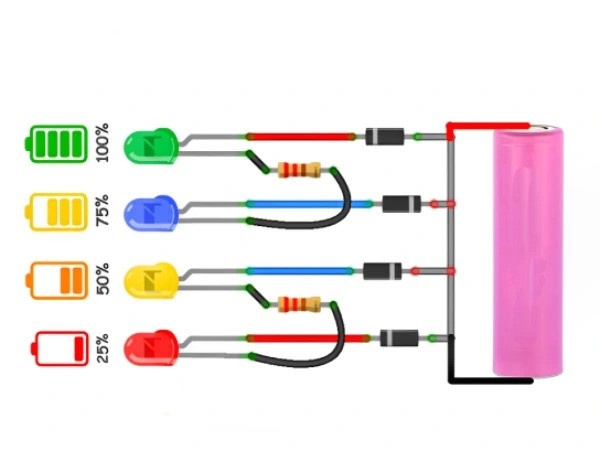
Key Voltage Parameters of 18650 Batteries
Every 18650 cell follows specific voltage limits. These parameters define how it charges, discharges, and performs:
- Nominal Voltage (3.6V – 3.7V)
The average working voltage during a standard discharge cycle. It represents a balanced state of energy use. - Charging Limit Voltage (4.2V)
The highest safe voltage. Charging beyond this causes overcharging, leading to overheating, swelling, or battery failure. - Discharge Termination Voltage (2.75V)
The lowest recommended voltage. Discharging below this level results in over-discharge, which can permanently damage the battery.
Voltage Characteristics of Different 18650 Battery Chemistries
18650 batteries use different chemical compositions, affecting voltage performance, safety, and lifespan. Understanding these differences helps users choose the right battery for specific applications.
Lithium Cobalt Oxide (LiCoO₂) – High Energy Density
LiCoO₂ batteries deliver high energy storage in a compact size, making them popular for laptops, cameras, and mobile devices.
- Nominal Voltage: 3.7V
- Charging Limit Voltage: 4.2V
- Discharge Termination Voltage: 2.75V
🔹 Pros: High capacity, long runtime
🔹 Cons: Overheats under heavy load, shorter cycle life
Lithium Iron Phosphate (LiFePO₄) – Superior Safety & Longevity
LiFePO₄ batteries offer enhanced thermal stability and long cycle life, ideal for solar storage, EVs, and power tools.
- Nominal Voltage: 3.2V
- Charging Limit Voltage: 3.6V
- Discharge Termination Voltage: 2.0V
🔹 Pros: High safety, stable voltage, long lifespan
🔹 Cons: Lower energy density, bulkier than other lithium cells
Lithium Nickel Manganese Cobalt Oxide (NMC) – Balanced Performance
NMC batteries combine high energy density and strong thermal stability, making them the go-to choice for electric vehicles and high-drain devices.
- Nominal Voltage: 3.6V – 3.7V
- Charging Limit Voltage: 4.2V
- Discharge Termination Voltage: 2.5V
🔹 Pros: Good balance of power and safety, high discharge rate
🔹 Cons: Expensive, degrades faster under heavy use
Lithium Manganese Oxide (LiMn₂O₄) – High Power Output
LiMn₂O₄ batteries provide fast discharge rates and good thermal performance, making them suitable for power tools, medical devices, and electric bikes.
- Nominal Voltage: ~3.7V
- Charging Limit Voltage: 4.2V
- Discharge Termination Voltage: 2.5V
🔹 Pros: High current output, runs cooler
🔹 Cons: Lower cycle life than NMC and LiFePO₄
Comparison of 18650 Battery Chemistries
| Battery Type | Nominal Voltage | Max Voltage | Cutoff Voltage | Key Strengths | Best Use Cases |
|---|---|---|---|---|---|
| LiCoO₂ | 3.7V | 4.2V | 2.75V | High capacity | Laptops, cameras |
| LiFePO₄ | 3.2V | 3.6V | 2.0V | Safety, longevity | Solar, EVs |
| NMC | 3.6V – 3.7V | 4.2V | 2.5V | Balanced performance | Electric vehicles |
| LiMn₂O₄ | ~3.7V | 4.2V | 2.5V | High power output | Power tools, e-bikes |
Each chemistry offers unique advantages. Selecting the right 18650 battery depends on power needs, safety concerns, and lifespan expectations.
Factors Affecting 18650 Battery Voltage
Understanding what influences the voltage of 18650 batteries helps optimize their performance, extend their lifespan, and ensure safe operation in various applications. Several key factors determine how these lithium-ion cells behave under different conditions.
State of Charge (SOC)
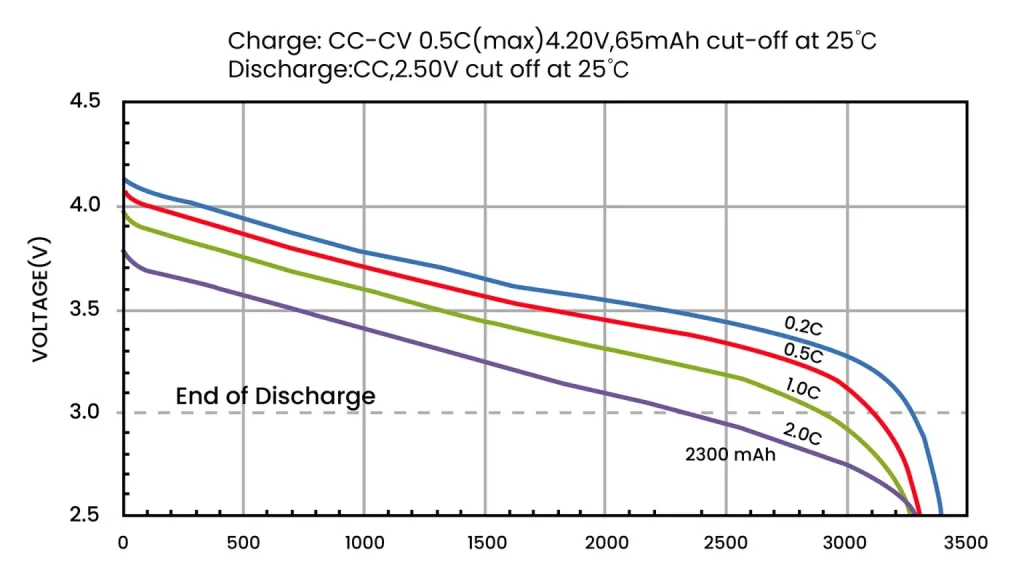
The most direct relationship exists between a battery’s voltage and its state of charge. As energy is consumed, voltage gradually decreases in a predictable pattern that varies by chemistry, like 18650 Battery Voltage Chart below:
| State of Charge (%) | Voltage (V) |
|---|---|
| 100% (Fully Charged) | 4.2V |
| 90% | 4.0V |
| 80% | 3.9V |
| 70% | 3.8V |
| 60% | 3.7V |
| 50% | 3.6V |
| 40% | 3.5V |
| 30% | 3.4V |
| 20% | 3.2V |
| 10% | 3.0V |
| 0% (Fully Discharged) | ~2.5V – 3.0V |
Load and Discharge Rate
The rate at which current is drawn significantly impacts voltage behavior:
- Higher loads cause more pronounced voltage drops due to internal resistance
- Sustained high-current applications may reduce effective capacity
- Fast discharge generates more heat, further affecting voltage stability
Temperature
Temperature has a notable effect on 18650 battery performance:
- Cold environments (<0°C/32°F): Increased internal resistance, decreased capacity, voltage drops more rapidly
- Hot environments (>45°C/113°F): Temporary voltage increase but accelerated degradation
- Optimal range: 20-25°C (68-77°F) for best performance and longevity
Battery Chemistry and Design
Different lithium-ion formulations exhibit unique voltage characteristics:
| Chemistry | Nominal Voltage | Max Charge | Min Discharge |
|---|---|---|---|
| LiCoO₂ | 3.7V | 4.2V | 2.75V |
| NMC | 3.6-3.7V | 4.2V | 2.5V |
| LiFePO₄ | 3.2V | 3.65V | 2.0-2.5V |
| LiMn₂O₄ | 3.7V | 4.2V | 2.5V |
Internal Resistance
This inherent property increases over time and affects how voltage responds to load:
- Higher resistance = greater voltage drop under load
- Contributes to heat generation during operation
- Key indicator of battery health and performance capability
Age and Cycle Life
As batteries age, their voltage characteristics change:
- Capacity slowly decreases to around 70-80% after hundreds of cycles
- Voltage drops more rapidly under load in aged cells
- Rest voltage may recover more slowly after use
How State of Charge Impacts Voltage
The relationship between SOC and voltage is non-linear, with steeper drops at the beginning and end of discharge. This “S-curve” characteristic makes voltage monitoring most accurate in the middle range (20-80% SOC).
Manufacturers often provide detailed voltage-capacity curves for precise estimation of remaining capacity. These curves allow battery management systems to calculate remaining runtime based on current voltage and load conditions.
Temperature Effects on 18650 Battery Voltage
Temperature significantly influences how 18650 batteries perform:
- Low Temperatures (<0°C / 32°F): Reduced ion mobility slows chemical reactions, increasing internal resistance and causing earlier voltage drops
- High Temperatures (>45°C / 113°F): Enhanced ion mobility temporarily improves conductivity but accelerates side reactions that degrade the electrode materials
- Optimal Range (20-25°C / 68-77°F): Ensures stable voltage and longer battery life.
For optimal performance, always maintain 18650 batteries within their specified temperature range during both use and storage.
18650 Battery Charging and Discharging
Proper charging and discharging are essential for maintaining 18650 battery performance, lifespan, and safety.
Standard Charging Voltage and Current
The standard charging voltage for most 18650 lithium-ion batteries is 4.20V ± 0.05V. Charging beyond this limit risks damage to the cell structure and can lead to safety hazards.
Recommended charging parameters:
- Maximum voltage: 4.2V per cell
- Standard charging current: 0.5C (half the battery’s capacity rating)
- Fast charging current: 1C (not recommended for regular use)
- Trickle charging: For deeply discharged cells (<3.0V)
Most manufacturers suggest limiting fast charging to occasional use. Regular charging at lower currents (0.5C or less) significantly improves cell longevity.
Constant Current and Constant Voltage Charging Stages
The charging process occurs in two distinct phases:
- Constant Current (CC) Phase
- Battery accepts charge at full current rate
- Voltage rises steadily from discharged state (~3.0V) toward 4.2V
- This phase delivers about 70-80% of total capacity
- Constant Voltage (CV) Phase
- Begins when cell reaches 4.2V
- Charger maintains steady voltage
- Current gradually decreases
- Charging completes when current drops to approximately 0.05C
This CC-CV method prevents overcharging while ensuring cells reach full capacity safely.
Charging Voltage and Current by Battery Pack Voltage
For multi-cell battery packs, charger specifications must match the configuration:
| Battery Pack Configuration | Charger Voltage | Recommended Max Current |
|---|---|---|
| Single cell (3.7V) | 4.2V | 2A |
| 2S (7.4V) | 8.4V | 1A |
| 3S (11.1V) | 12.6V | 4A |
| 4S (14.8V) | 16.8V | 4A |
| 5S (18.5V) | 21.0V | 4A |
| 6S (22.2V) | 25.2V | 2A |
| 7S (25.9V) | 29.4V | 2A |
| 10S (37V) | 42.0V | 5A |
Battery packs always require balancing during charging to ensure each cell receives equal voltage.
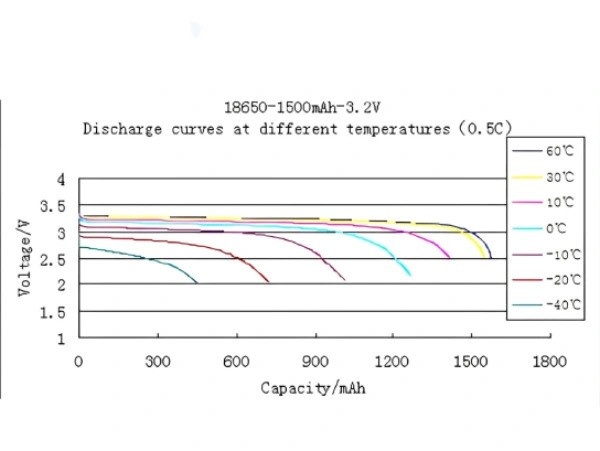
18650 Battery Discharge Curve and Voltage Drop
When discharging, 18650 cells follow a characteristic voltage profile:
- Initial Voltage Drop: A small, immediate drop occurs when load is applied due to internal resistance.
- Gradual Decline Phase: The majority of discharge shows a relatively slow, linear voltage decrease from about 4.0V to 3.5V.
- Accelerated Drop: Near depletion (typically below 3.3V), voltage begins falling more rapidly.
- Cut-off Point: At approximately 2.5-3.0V, most devices stop operation to prevent damage.
The rate of discharge strongly influences this curve. Higher current draws cause steeper voltage drops and reduce total available capacity. They also generate more heat, potentially shortening cell lifespan.
Most 18650 batteries deliver their rated capacity when discharged at 0.2C rate. Heavier loads may reduce usable capacity by 10-30% compared to manufacturer ratings.
Dangers of Overcharging and Over-Discharging
Overcharging Beyond 4.2V
Exceeding the 4.2V maximum charge limit creates serious risks:
- Electrolyte Breakdown: The liquid separator between anode and cathode decomposes
- Gas Formation: Chemical reactions generate pressure inside the sealed cell
- Thermal Runaway: Heat builds up faster than it dissipates
- Lithium Plating: Metallic lithium forms on the anode, creating internal short circuits
- Capacity Fade: Accelerated degradation shortens useful lifespan
- Fire/Explosion Risk: In extreme cases, cells may rupture or ignite
Even minor overcharging to 4.3V significantly reduces battery life. Charging to 4.4V or beyond creates immediate safety hazards.
Over-Discharging Below 2.5V
Allowing voltage to drop below minimum thresholds causes permanent damage:
- Copper Dissolution: At extremely low voltages, copper current collectors dissolve
- Internal Short Circuits: Recharging after copper dissolution may create dangerous shorts
- Irreversible Capacity Loss: Each minute spent below 2.5V degrades maximum capacity
- Increased Internal Resistance: The battery delivers less power and heats more under load
Battery Protection and Management Systems
18650 batteries require protection and management systems to maintain safety, longevity, and efficiency. Overcharging, over-discharging, or excessive heat can cause permanent damage or hazardous failures. Reliable battery protection systems help prevent these risks.
Battery Management System (BMS)
A Battery Management System (BMS) serves as the brain for battery packs. This electronic system monitors and controls the charging and discharging process.
Key functions of a BMS include:
- Cell balancing: Ensures all cells in a pack maintain equal voltage
- State of charge monitoring: Tracks remaining capacity
- Overcurrent protection: Prevents excessive current draw
- Temperature monitoring: Shuts down operation in unsafe temperature conditions
BMS complexity varies by application:
| BMS Type | Typical Application | Features |
|---|---|---|
| Basic | Single cell devices | Overcharge/discharge protection only |
| Standard | Multi-cell packs | Cell balancing, basic monitoring |
| Advanced | Electric vehicles | Full telemetry, active cooling control |
For DIY battery packs, users should never connect 18650 cells in series without a proper BMS. The BMS prevents individual cells from exceeding safe voltage limits during both charging and discharging.
Voltage Monitoring Tools
Several tools help users monitor battery voltage for safety and performance:
- Multimeters: Basic tool for voltage measurement
- Accuracy: ±0.5% typical
- Best for: Single cell testing, quick checks
- Battery Voltage Alarms: Simple devices connecting directly to battery
- Features: Audio/visual alerts when voltage drops below preset limits
- Best for: RC hobbies, portable applications
- LiPo Voltage Checkers: Small devices showing charge status
- Display: LED or digital readout of voltage
- Best for: Field use, quick status checks
- Smart Chargers: Modern charging stations
- Functions: Display voltage during charge/discharge
- Best for: Home users, battery maintenance
Regular voltage monitoring helps detect cells showing unusual behavior before they present safety risks.

Safety Features in Battery Protection
Preventing Overcharge and Over-discharge
Protection circuits employ several methods to keep voltage within safe limits:
- Overcharge Protection: Cuts off charging at 4.2V per cell
- Activates within 50-100mV of threshold
- Requires voltage drop before resuming charge
- Over-discharge Protection: Disconnects load when voltage falls below 2.5-3.0V
- Prevents copper dissolution and internal damage
- Some circuits include hysteresis to prevent oscillation
- Short Circuit Protection: Rapidly disconnects when current exceeds safe limits
- Response time: Typically 200-500 microseconds
- May require manual reset after activation
Protected 18650 cells include tiny circuit boards. These boards add about 3-5mm to cell length but provide essential safety features for single-cell applications.
Thermal Regulation Mechanisms
Temperature control ranks among the most critical protection features:
- Positive Temperature Coefficient (PTC) devices:
- Function: Self-heating resistors increase resistance when hot
- Action: Limit current automatically as temperature rises
- Thermal Fuses:
- Function: Permanently disconnect at specific temperature
- Typical threshold: 90°C (194°F)
- Temperature Sensors:
- Function: Allow BMS to monitor cell temperature
- Types: Thermistors, digital temperature ICs
- Venting Mechanisms:
- Function: Release pressure before catastrophic failure
- Safety note: Vented cells must be immediately removed from service
Proper thermal protection prevents the dangerous cycle where heat increases internal resistance, generating more heat under load.
For maximum safety, users should select 18650 batteries from reputable manufacturers. These cells include reliable internal protection features alongside better overall performance.
Conclusion
Understanding 18650 battery voltage is essential for performance, longevity, and safety. Proper voltage management prevents overcharging, over-discharging, and overheating.
Maintaining voltage between 3.0V and 4.2V extends battery life. Using a Battery Management System (BMS) ensures stable operation.
For best results, charge with recommended voltage and current, monitor temperature, and avoid deep discharges. Regular voltage checks improve efficiency and safety.
Frequently Asked Questions
Q: Can a 3.7V battery replace a 4.2V battery?
A: Yes, a 3.7V battery can replace a 4.2V battery. This is because 3.7V is the nominal voltage of lithium batteries, while 4.2V is the maximum charging voltage. Both refer to the same type of battery, just different voltage states in its lifecycle.
Q: What happens if an 18650 battery voltage exceeds 4.2V?
A: Exceeding 4.2V causes overpotential, leading to electrolyte breakdown, gas formation, heat buildup, and lithium metal plating on the anode. This creates internal short circuits, accelerates capacity degradation, and significantly increases the risk of swelling, venting with flame, or explosion.
Q: How many 18650 batteries are needed for a 12V system?
A: Three 18650 batteries connected in series are needed for a 12V system. The nominal voltage of each 18650 battery is 3.7V, so three cells in series produce 11.1V, which is commonly referred to as 12V in the battery industry.
Q: What is low and high voltage for 18650?
A: For standard 18650 cells, high voltage is 4.2V (fully charged) and low voltage is 2.5-3.0V (discharged). Going above 4.2V risks damage through overcharging, while dropping below 2.5V can cause irreversible damage through over-discharge and copper dissolution.
Q: At what voltage is a 3.7V battery dead?
A: A 3.7V lithium-ion battery is considered dead when its voltage drops to around 3.0V. At this point, protection circuits typically stop discharge to prevent damage. The absolute minimum is 2.75V, but batteries should be recharged when reaching approximately 3.24V (87.5% of nominal voltage).
Q: Can I charge a 3.7V battery with a 4.2V charger?
A: Yes, you can charge a 3.7V battery with a 4.2V charger. The 3.7V represents the nominal voltage, while 4.2V is the proper full charging voltage. A 4.2V charger is designed specifically for 3.7V lithium-ion batteries to bring them to their full charge.
Q: What is the highest output 18650 battery?
A: The highest capacity 18650 battery currently available is 3500mAh, like the LG MJ1 cell. These high-output 18650 batteries can deliver up to 19W power with maximum current of 7A and voltage around 4.2V, making them suitable for both high and low-power applications.
Q: Is 18650 3.7 or 4.2?
A: An 18650 battery is both 3.7V and 4.2V, referring to different states. 3.7V is the nominal (average) voltage during operation, while 4.2V is the maximum voltage when fully charged. The battery operates between these values throughout its discharge cycle.