
Batteries power our world, from electric vehicles to smartphones. But before they can be used, they must go through battery formation.
This crucial step in battery manufacturing ensures performance, safety, and longevity. A poorly formed battery won’t last, won’t charge properly, and might even fail.
With the rising demand for high-performance batteries, efficient formation processes are more important than ever. Precision and automation make all the difference.
In this post, you’ll learn why battery formation matters, how it works, and the innovations shaping its future.
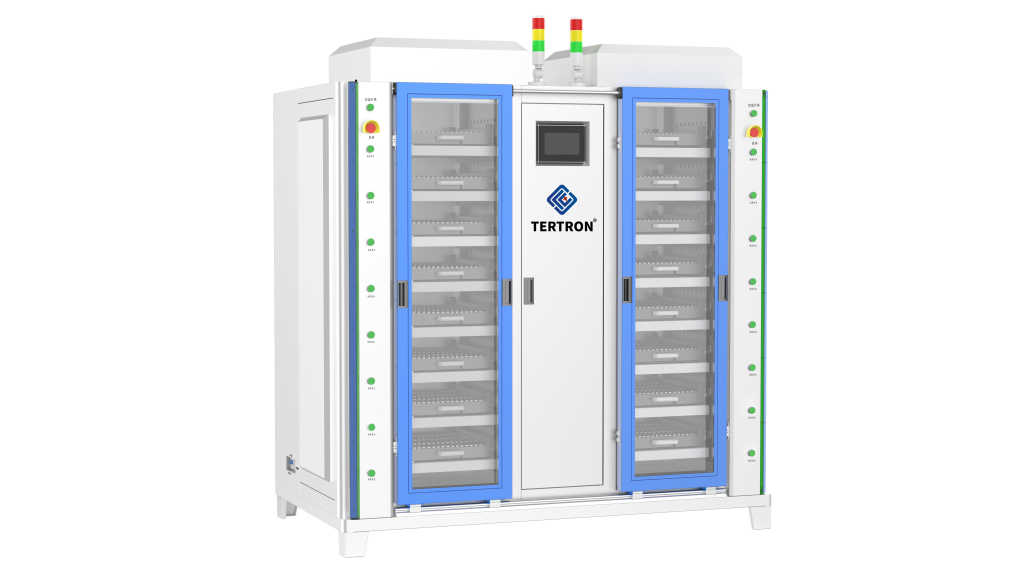
What is Battery Formation?
Battery formation is a critical process in manufacturing that prepares a battery for long-term use. It involves controlled charging and discharging cycles that activate the electrochemical materials inside the battery. This process ensures optimal performance, safety, and longevity before the battery reaches consumers.
Definition and Purpose of Battery Formation
Battery formation is the controlled initial charge and discharge cycling of a newly assembled battery cell or pack. This process activates the electrochemical materials inside the battery, transitioning them from raw materials into a functional energy storage system.
For lithium-ion batteries used in electric vehicles (EVs), formation involves precisely controlled charging and discharging cycles that create the solid electrolyte interphase (SEI) on the anode and the cathode electrolyte interface (CEI). These interfaces are crucial protective layers that enable the battery to function properly.
In lead-acid batteries, formation begins by immersing the plates in sulfuric acid, allowing the first chemical reaction to occur. This creates layers of lead sulfate on the plate surfaces—a critical step in enabling the electrochemical reactions that power the battery.
💡 Key Insight: Formation is currently the main bottleneck in battery manufacturing, with processes taking up to 20 hours to complete. However, manufacturers cannot skip this step as it directly impacts battery quality, lifespan, and safety.
Key Role in Battery Lifespan, Performance, and Safety
Battery formation delivers several crucial benefits that directly impact overall battery performance:
| Benefit | Description | Impact on Battery |
|---|---|---|
| Activation | Establishes initial capacity by activating all positive and negative electrode materials | Ensures the battery can deliver its specified performance |
| Stabilization | Reduces unwanted chemical side reactions | Enhances long-term reliability and safety |
| Balancing | Ensures uniform state of charge across cells | Contributes to consistent performance |
| SEI Formation | Creates a protective layer on electrodes | Prevents capacity fade and extends cycle life |
| Quality Control | Identifies potential defects early | Ensures only market-ready batteries reach consumers |
Manufacturers utilize specialized battery formation equipment featuring high-precision power systems that can deliver voltage and current accuracy of up to 0.01%. This precision is essential as any deviation in the formation process can lead to reduced battery performance or even safety hazards.
Distinction Between Battery Formation and Aging
While often mentioned together, battery formation and aging represent different stages in the manufacturing process:
- Formation Phase
- Primary purpose: Building the critical SEI layer
- Involves slow, controlled charging and discharging
- Creates fundamental electrochemical structure
- Typically occurs immediately after assembly and electrolyte filling
- Aging Phase
- Follows the formation process
- Consists of repeated cycles at different rates and rest periods
- Allows for high-temperature aging (30-50°C) where chemical reactions stabilize
- Includes monitoring of quality parameters
- Concludes with end-of-line (EOL) tests to characterize and grade cells
The combined formation and aging processes ensure that only properly functioning batteries proceed to the next manufacturing steps. For EV batteries, this grading process is particularly critical—only “A-grade” cells meeting stringent performance criteria are suitable for vehicle battery packs.
The Battery Formation Process
Battery formation is a multi-step procedure that activates, stabilizes, and optimizes a battery before it reaches end-users. This process varies based on battery chemistry, but the goal remains the same: to enhance lifespan, safety, and performance.
Key Steps in Battery Formation
Each battery undergoes a series of controlled steps to ensure electrochemical stability before final assembly.
1. Pre-formation: Preparing the Electrodes
Before charging, electrodes need pre-conditioning to ensure proper electrolyte absorption and prevent material degradation. This step includes:
- Ensuring the electrode material is structurally intact.
- Properly infiltrating electrolyte into active materials.
- Reducing internal resistance to enhance lithium-ion transport.
2. Initial Charging and Discharging Cycles
The first charge-discharge cycles introduce a low and controlled current to activate the electrodes. This step:
- Prevents material stress that could lead to cracking or lithium plating.
- Allows chemical reactions to stabilize without excessive heat generation.
- Ensures that cells reach their designed capacity and efficiency.
3. SEI Formation in Lithium-Ion Batteries
A crucial step in lithium-ion batteries is the formation of the Solid Electrolyte Interphase (SEI). This protective layer:
- Forms on the anode during the first charge cycle.
- Prevents unwanted side reactions that can reduce battery life.
- Improves battery efficiency and safety by controlling lithium-ion movement.
4. High-Temperature Aging for Chemical Stabilization
After initial formation, batteries undergo high-temperature aging (30-50°C) to:
- Allow chemical reactions to complete and stabilize.
- Balance lithium-ion concentration in the electrodes.
- Enhance final SEI stabilization and electrode wetting.
5. Sorting and Grading Based on Battery Performance
After formation and aging, batteries are tested and classified into different grades:
| Grade | Quality | Applications |
|---|---|---|
| A-Grade | Highest capacity and performance | EVs, medical devices, aerospace |
| B-Grade | Slightly lower performance | Energy storage systems (ESS), consumer electronics |
| C-Grade | Low performance, possible defects | Single-use applications, low-demand devices |
Formation for Different Battery Chemistries
| Chemistry | Formation Method | Key Considerations |
|---|---|---|
| Lithium-ion | SEI/CEI formation at 0.1C rate | Requires precise voltage/current control (±0.02%), highly sensitive to formation parameters |
| Lead-acid | Wet formation (in-case) or dry formation (outside case) | Often requires water cooling during formation due to heat generation |
| Nickel-based | Activation of metal hydride (MH) electrode | Requires specialized formation to prevent memory effect and ensure proper activation |
How Long Does Battery Formation Take?
Formation time varies significantly based on battery chemistry, size, and intended application:
- Lithium-ion EV cells: Formation and aging can take 2-3 days total
- Single charge/discharge cycles typically require up to 20 hours (at 0.1C rate)
- High-temperature aging adds additional hours or days
- Factors influencing duration:
- Battery chemistry and capacity
- Desired performance characteristics
- Formation current rates
- Required accuracy and quality standards
Manufacturers increasingly implement automated formation equipment to accelerate this process while maintaining precision. Automated systems improve throughput, ensure consistent quality, and reduce the workforce needed for this time-intensive process.
Challenges in Battery Formation
Battery formation is a critical yet complex process in battery manufacturing. It requires precise control over multiple parameters to ensure performance, longevity, and safety. However, manufacturers face several key challenges that impact efficiency and cost.
Energy Consumption and Process Efficiency
Energy consumption represents a significant challenge in battery formation, particularly for large-format cells used in electric vehicles:
- Energy costs can account for up to 30% of the total production cost for large-capacity cells
- The lengthy formation process (up to 20 hours per cycle) leads to substantial energy consumption
- Energy recycling systems become critical for economic viability of large-cell production
- Process bottlenecks in formation facilities can impact overall manufacturing throughput
Manufacturers increasingly implement energy recovery systems that either recycle energy within the formation system or feed it back to the power grid, substantially reducing operational costs.
Maintaining Voltage and Current Accuracy
Formation quality directly correlates with precision control of electrical parameters:
⚡ Critical Requirement: Battery manufacturers typically demand voltage and current accuracy of ±0.01% to ±0.02% throughout the formation process.
This extreme precision necessitates sophisticated power systems with advanced control algorithms. Even minor deviations can lead to inconsistent SEI formation, reduced capacity, and shortened battery lifespan.
Temperature Control and Thermal Management
| Temperature Challenge | Impact | Solution Approach |
|---|---|---|
| Heat generation during charging | Degraded battery performance and lifespan | Water cooling systems (lead-acid), thermal management systems (lithium-ion) |
| Consistent high-temperature aging (30-50°C) | Required for chemical stabilization | Precision temperature-controlled chambers |
| Temperature variations across battery lots | Inconsistent formation quality | Automated temperature monitoring and control |
Safety Concerns
Formation processes present several safety challenges that must be carefully managed:
- Gas emissions – like CO₂ and hydrogen generation, particularly during pre-formation
- Electrolyte exposure – Potential chemical hazards for workers
- Thermal runaway risks – Improper formation can lead to future battery failure
- Pressure buildup – Gas accumulation requires proper venting or negative pressure systems
Cost Implications
The high-precision requirements of battery formation drive significant capital expenditures:
- Specialized formation equipment with ±0.01% accuracy commands premium prices
- Automation systems reduce labor costs but require substantial upfront investment
- Temperature control systems and safety equipment add to facility costs
- Energy recycling systems represent additional infrastructure expense
Balancing these challenges while maintaining quality is essential for competitive battery manufacturing operations.
Equipment Used in Battery Formation
Battery formation is a highly controlled process requiring specialized equipment to ensure precision, efficiency, and safety. The right tools improve battery performance, lifespan, and production speed while reducing energy consumption. Below, we explore the key equipment used in battery formation.
1. Battery Formation Power Systems (AC-DC, DC-DC Converters)
Battery formation requires precise power conversion systems to regulate voltage and current. The two primary systems used are:
| Power System | Function | Application |
|---|---|---|
| AC-DC Converters | Converts alternating current (AC) to direct current (DC) | Used in grid-powered battery formation |
| DC-DC Converters | Adjusts voltage levels within the DC power supply | Ensures stable and precise charge cycles |
- AC-DC converters provide the necessary direct current (DC) for battery formation.
- DC-DC converters fine-tune voltage and current for optimized formation conditions.
These systems ensure high efficiency and stability, preventing fluctuations that could damage battery cells.
2. Automated Electrolyte Filling Machines
Electrolyte is a critical component in batteries, and precise filling is essential to ensure proper function. Manual filling can lead to:
- Inconsistent electrolyte levels, affecting battery performance.
- Wasted materials, increasing production costs.
- Worker exposure to hazardous chemicals.
Automated electrolyte filling machines solve these issues by:
✔ Delivering precise amounts of electrolyte to each cell.
✔ Reducing waste by minimizing spills and excess use.
✔ Improving worker safety by eliminating direct chemical handling.
3. Temperature-Controlled Water Bath Systems
During battery formation, heat generation is a major concern. Overheating can lead to:
- Reduced battery efficiency due to thermal stress.
- Safety hazards, including electrolyte leaks and pressure buildup.
- Inconsistent formation results, affecting battery grading.
Temperature-controlled water bath systems regulate the heat by:
✔ Submerging battery cases in temperature-regulated water.
✔ Dissipating excess heat, preventing overheating.
✔ Ensuring uniform formation conditions across all battery cells.
This system is especially crucial in wet-formed lead-acid batteries and high-capacity lithium-ion cells.
4. High-Precision Voltage and Current Control Equipment
Maintaining stable voltage and current during formation is essential for:
- SEI (Solid Electrolyte Interphase) formation in lithium-ion batteries.
- Preventing overcharging and damage to battery cells.
- Ensuring consistent performance across all batteries.
High-precision voltage and current control equipment ensures:
✔ Voltage fluctuations stay within ±0.01% accuracy.
✔ Each cell receives the correct current to prevent degradation.
✔ Real-time adjustments for optimal charge-discharge cycles.
This equipment is vital for achieving consistent, high-quality batteries across large production batches.
5. Software for Monitoring and Optimizing the Formation Process
Modern battery formation relies on advanced software to improve efficiency. Real-time monitoring and automated adjustments help manufacturers:
- Track voltage, current, and temperature across thousands of cells.
- Detect anomalies early, preventing defective batteries.
- Optimize formation parameters using AI-driven data analysis.
💻 Formation Management Software continuously monitors critical parameters, automatically adjusts formation profiles, and collects data for quality assurance and process improvement.
Key software capabilities include:
- Real-time monitoring of formation parameters
- Automated testing and grading algorithms
- Process optimization through data analysis
- Integration with factory management systems
- Customizable formation profiles for different battery types
Battery Testing and Quality Control After Formation
Once the battery formation process is complete, rigorous testing and quality control ensure each cell meets performance, safety, and reliability standards. This phase includes high-rate discharge testing, sorting and grading, and high-temperature aging to eliminate defective units and optimize battery performance.
High-Rate Discharge Testing
Why Is High-Rate Discharge Testing Essential?
High-rate discharge testing evaluates a battery’s ability to deliver energy efficiently under load. This is crucial for applications that require sudden power bursts, such as electric vehicles (EVs) and power tools. The test helps to:
✔ Ensure the battery meets its rated capacity and energy output.
✔ Detect voltage drops, capacity loss, and irregular discharge rates.
✔ Improve safety by identifying cells prone to overheating or failure.
How to Identify Defective Cells After Formation
Defective batteries often display inconsistent performance during discharge testing. Some key failure indicators include:
- Excessive voltage drop under high current loads.
- Rapid overheating, indicating poor thermal management.
- Lower than expected capacity, leading to shorter battery life.
- Internal resistance spikes, suggesting material degradation.
Batteries that fail this test are either reprocessed, downgraded, or discarded to ensure only high-quality products reach consumers.
Sorting and Grading Batteries
Not all batteries perform equally after formation. Manufacturers classify them into different grades based on performance:
| Battery Grade | Performance Level | Applications |
|---|---|---|
| A-Grade | Meets all performance criteria | EVs, medical devices, aerospace |
| B-Grade | Slightly lower efficiency | Consumer electronics, energy storage |
| C-Grade | Reduced performance, possible minor defects | Backup power, low-energy applications |
- A-Grade batteries are the highest quality, with maximum efficiency and longevity.
- B-Grade batteries may have minor deviations but are still safe and reliable.
- C-Grade batteries have limited performance and are used in non-critical applications.
This sorting ensures that only the best batteries are used in high-demand industries, while lower-grade batteries find suitable alternative uses.
Aging Process for Stabilization
How High-Temperature Aging Enhances Performance
After formation, batteries undergo an aging process, where they are stored at elevated temperatures to allow chemical reactions to stabilize. This helps:
✔ Improve battery cycle life by reducing early capacity loss.
✔ Ensure SEI stabilization in lithium-ion cells.
✔ Detect latent defects, such as self-discharge issues.
Typical aging conditions involve:
- Temperatures between 30°C and 50°C.
- Storage periods ranging from days to weeks, depending on chemistry.
Final Battery Quality Assurance Before Market Release
Before batteries are shipped, final quality control measures include:
- Charge retention tests to ensure stable energy storage.
- Capacity verification to confirm rated energy output.
- Safety inspections to prevent hazardous failures.
By the end of this process, manufacturers eliminate substandard cells, ensuring that only high-quality, reliable batteries reach consumers.
Optimizing the Battery Formation Process
Battery formation is a complex electrochemical process that determines the stability, efficiency, and lifespan of a battery. By optimizing key factors—such as electrode activation, Solid Electrolyte Interphase (SEI) formation, and gas management—manufacturers can enhance battery performance and reliability.
1. Activating Positive and Negative Electrode Materials
During formation, lithium ions move between the positive (cathode) and negative (anode) electrodes, establishing the battery’s charge-discharge cycle. Proper activation ensures:
| Activation Process | Key Impact |
|---|---|
| Lithium-ion extraction and insertion | Prevents material degradation and capacity loss |
| Material structure integrity | Reduces electrode stress and ensures long-term stability |
| Electrolyte infiltration | Enhances ion transport and prevents dry spots |
To optimize this phase, slow and controlled charge cycles are used, allowing lithium ions to fully integrate into the electrode structure without causing damage.
2. Generating a Dense SEI Film
The SEI layer is a protective barrier that forms on the anode, regulating ion flow and preventing unwanted side reactions. A well-formed SEI enhances battery lifespan and efficiency.
Key Factors in SEI Optimization:
✔ Current control in pre-formation: Ensures even film growth without excessive lithium consumption.
✔ Balancing SEI formation and lithium-ion solvation: Prevents thick, unstable layers that reduce battery efficiency.
✔ Repairing SEI defects during main formation: Detects early-stage irregularities and allows for self-healing reactions.
💡 Best Practice: Implementing a multi-stage charging profile helps control SEI growth, preventing defects and ensuring a dense, uniform layer.
3. Managing Gas Evolution and Recombination
Gas formation is an inevitable byproduct of battery formation, mainly caused by electrolyte decomposition and SEI reactions. Uncontrolled gas buildup can:
- Cause electrode swelling, affecting cell integrity.
- Lead to electrolyte loss, reducing battery capacity.
- Increase safety risks, such as vent clogging or pressure buildup.
| Gas Management Strategy | Benefits |
|---|---|
| Negative pressure formation | Extracts excess gas efficiently, preventing internal swelling |
| Slow charge rate adjustments | Reduces gas generation by controlling reaction speed |
| Specialized venting systems | Allows controlled gas escape, maintaining electrolyte stability |
💡 Best Practice: Vacuum-assisted formation chambers improve gas removal, minimizing electrode damage and enhancing overall battery consistency.
Future Innovations in Battery Formation
The battery formation process is evolving rapidly with new technologies addressing efficiency, sustainability, and performance challenges.
AI and Machine Learning for Battery Formation Optimization
AI and machine learning are transforming battery formation through:
- Data-driven optimization of charging profiles, reducing formation time by up to 25%
- Real-time adjustments to formation parameters based on continuous monitoring
- Predictive quality control identifying potential defects before end-of-line testing
💡 AI Impact: Machine learning models optimize formation parameters without extensive experimentation, improving both efficiency and battery performance.
Sustainable Energy Use in Battery Formation
Energy sustainability innovations address the significant power consumption of formation:
| Innovation | Future Direction |
|---|---|
| Energy Recovery | Bi-directional grid integration with peak shaving |
| Renewable Integration | Direct solar/wind power with battery storage |
Formation facilities increasingly incorporate on-site renewable generation, creating a more sustainable battery lifecycle from manufacturing through end use.
Next-Generation Electrolytes and SEI-Enhancing Additives
Material innovations promise to transform the formation process:
- Film-Forming Additives
- Engineered molecules that accelerate SEI development
- Compounds that create more stable interface layers with less gas generation
- Solid-State Electrolytes
- Modified formation protocols reducing or eliminating traditional SEI requirements
- Significantly reduced formation times through alternative interface mechanisms
These advances could potentially reduce formation times from days to hours, dramatically increasing production throughput while enhancing battery performance and longevity.
Conclusion
Battery formation is a critical step that defines a battery’s performance, lifespan, and safety. Without proper formation, batteries degrade faster and become unreliable.
Automation and advanced technologies improve efficiency, reduce errors, and lower production costs. AI-driven monitoring ensures precise control over charging, SEI formation, and gas management.
The future of battery formation lies in sustainable energy solutions. Innovations like energy recovery systems and eco-friendly materials will drive cleaner, more efficient battery production.
FAQs About Battery Formation
Q: What is battery formation, and why is it necessary?
A: Battery formation is the initial charge and discharge cycling process that activates newly assembled battery materials. It’s necessary because it creates critical interfaces like SEI (Solid Electrolyte Interphase), activates electrode materials, and establishes the battery’s initial capacity and performance characteristics. Without proper formation, batteries cannot deliver their specified performance or lifespan.
Q: How does battery formation affect battery lifespan?
A: Formation directly impacts battery lifespan by establishing the protective SEI layer that prevents continuous electrolyte decomposition. Proper formation stabilizes battery chemistry, reduces unwanted side reactions, and ensures balanced cell performance. These factors significantly reduce capacity fade and internal resistance growth over time, extending the battery’s useful life.
Q: What happens if a battery is not properly formed?
A: Improperly formed batteries suffer from reduced capacity, elevated internal resistance, shortened cycle life, and potential safety issues. Poor formation results in unstable SEI layers, incomplete electrode activation, and improper lithium-ion distribution. Such defects can lead to accelerated degradation, decreased energy density, and higher risk of thermal runaway in extreme cases.
Q: How long does the battery formation process take?
A: Battery formation typically takes 2-3 days for lithium-ion cells. A single charge/discharge cycle at 0.1C rate requires up to 20 hours, followed by high-temperature aging (30-50°C) for several additional hours or days. Lead-acid battery formation can also take 2-3 days, particularly if done manually without automation.
Q: Can battery formation be skipped in production?
A: No, battery formation absolutely cannot be skipped. It’s an essential manufacturing step that “greatly impacts a battery’s life, quality and cost.” Nearly every battery must undergo formation before market release. It transforms raw materials into a functioning electrochemical system and provides critical quality control verification.
Q: What is the best method for lithium-ion battery formation?
A: The optimal lithium-ion formation method involves a two-stage process: low-current pre-formation to create a dense SEI film, followed by higher-current main formation cycles. The process requires voltage/current accuracy of ±0.02%, controlled temperature conditions, and proper gas management. These parameters must be precisely tailored to specific battery chemistries.
Q: How to prevent dendrite formation in batteries?
A: While the article doesn’t specifically address dendrite prevention, proper formation processes that create uniform, dense SEI layers help prevent dendrite growth. Controlling current rates during formation, ensuring complete electrolyte infiltration, and maintaining appropriate temperature conditions all contribute to preventing conditions that lead to dendrite formation.
Q: What equipment is essential for battery formation?
A: Essential equipment includes high-precision power systems (AC-DC or DC-DC converters with ±0.01% accuracy), temperature control systems, automated electrolyte filling machines, software-controlled charging equipment, and quality testing devices for high-rate discharge testing. For lead-acid batteries, water bath cooling systems are also critical.
Q: How does SEI formation impact battery safety?
A: SEI formation directly impacts safety by creating a protective barrier that prevents continuous electrolyte decomposition and reduces gas generation. A properly formed SEI layer helps prevent thermal runaway by stabilizing electrode-electrolyte interactions. Formation also identifies potential safety defects early before batteries reach consumers.
Q: Are there ways to speed up the battery formation process?
A: Yes, through automation systems, energy recovery technology, AI-optimized formation profiles, and advanced film-forming electrolyte additives. Manufacturers are also exploring pre-lithiated materials and new formation protocols that can potentially reduce formation times from days to hours while maintaining or improving quality.
Q: How does battery formation differ for different battery types?
A: Lithium-ion batteries focus on SEI/CEI formation at precise 0.1C rates. Lead-acid batteries use either wet formation (in-case) or dry formation (outside-case), often requiring water cooling. Different chemistries require specific formation profiles, temperatures, and durations based on their unique electrochemical properties.