
Have you ever wondered what powers your phone or fridge?
It’s all about volts and amps.
Understanding them helps you stay safe and save energy.
But many people confuse the two.
In this post, you’ll learn what volts and amps mean.
We’ll compare them, show real-life uses, and explain how they affect power.

What are Volts?
Voltage, measured in volts (V), is the electric potential difference between two points in an electrical circuit. This fundamental electrical property represents the “electrical pressure” that drives electrons through conductors, creating current flow. Just as gravity pulls water downhill, voltage pushes electrons from a point of higher potential to a point of lower potential.
Voltage is Electrical Pressure or Potential Difference
Think of voltage as the driving force behind electricity—it’s what gives electrons the energy to move through wires and power our devices. Without voltage, electrons would remain stationary, and no electrical work could be performed.
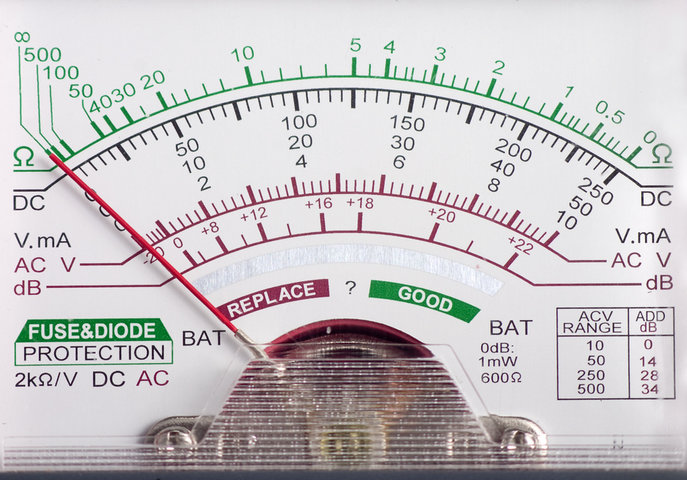
Analogies: Water Pressure in a Pipe, Height of a Waterfall
To understand voltage more intuitively, consider these common analogies:
- Water Pressure in a Pipe: Voltage acts like water pressure in a plumbing system. Higher water pressure pushes water through pipes more forcefully, just as higher voltage pushes electrons through conductors more powerfully. The pressure difference between two points determines how strongly water flows, similar to how voltage difference determines electrical flow.
- Height of a Waterfall: The higher a waterfall, the more potential energy water has as it drops. Similarly, a greater voltage difference creates more potential for electrical energy transfer. Just as water naturally flows from higher to lower elevations due to gravity, electrons naturally move from higher to lower voltage potentials.
Volt is the Unit of Measurement for Voltage
The volt is the standard international unit used to measure electrical potential difference or voltage. Named after Alessandro Volta, the Italian physicist who invented the first electric battery in 1800, one volt is defined as the potential difference that would cause one ampere of current to dissipate one watt of power when flowing through a conductor.
Typical Voltage Levels
Voltage levels vary widely depending on the application:
- Household Outlets: In the United States and Canada, standard wall outlets provide 120V AC (alternating current), while many other countries use 220-240V AC systems. This voltage is sufficient to power most household appliances while remaining relatively safe with proper precautions.
- Car Batteries: Automotive systems typically operate at 12V DC (direct current), which provides enough power to start engines and run vehicle electronics without requiring excessive insulation or safety measures.
- High Voltage Transmission Lines: Power companies transmit electricity over long distances using extremely high voltages—often 100kV (100,000 volts) or more—to minimize energy loss during transmission. These voltages are then stepped down through transformers before reaching our homes and businesses.
Other common voltage levels include:
- Small batteries (AA, AAA): 1.5V
- USB ports: 5V
- Solar panel systems: 12V, 24V, or 48V depending on size and application
Role of Voltage in a Circuit
Voltage is the Force that Pushes Current Through the Conductors
In any electrical circuit, voltage serves as the driving force that pushes electrons through conductors. According to Ohm’s Law (V = I × R), voltage (V) is directly proportional to current (I) when resistance (R) remains constant. This means that increasing the voltage while keeping resistance the same will result in proportionally more current flowing through the circuit.
Without Sufficient Voltage, Current Cannot Flow
No matter how large or well-designed a conductor might be, without adequate voltage, electrons simply won’t move. This principle is vital in circuit design—engineers must ensure sufficient voltage to overcome the inherent resistance in components while staying within safe operating parameters. In practical terms, this is why a 9V battery can power a small radio, but not an electric heater that requires 120V—the voltage is insufficient to generate the necessary current flow for higher-power applications.
What are Amps?
Amperage, measured in amps (A), is the rate of electrical current flowing through a circuit. It quantifies the volume of electrons passing through a conductor per unit of time. While voltage represents the electrical pressure, amperage indicates how much electricity is actually moving through the system.
Amperage Measures the Flow of Electric Charge
Current flow is fundamental to any working electrical system. Without current, no electrical work can be performed, regardless of voltage level.
Analogies: Flow Rate of Water in a Pipe, Quantity of Water Over a Waterfall
To understand amperage intuitively:
- Flow Rate of Water: If voltage is like water pressure in a pipe, amperage is like the volume of water flowing past a given point per second. A thin trickle and a rushing torrent may flow under the same pressure, but their flow rates (amperage) differ dramatically.
- Quantity of Water Over a Waterfall: While voltage resembles the height of a waterfall (potential energy), amperage represents how much water is actually flowing over the edge. A small mountain stream and the mighty Niagara Falls might drop the same distance, but their flow volumes (amperage) are vastly different.
Amp is the Unit of Measurement for Electric Current
The ampere, abbreviated as “amp” or “A,” is the standard international unit for measuring electrical current. It was named after French mathematician and physicist André-Marie Ampère, a pioneer in electromagnetism. One ampere is defined as the flow of one coulomb of electrical charge per second.
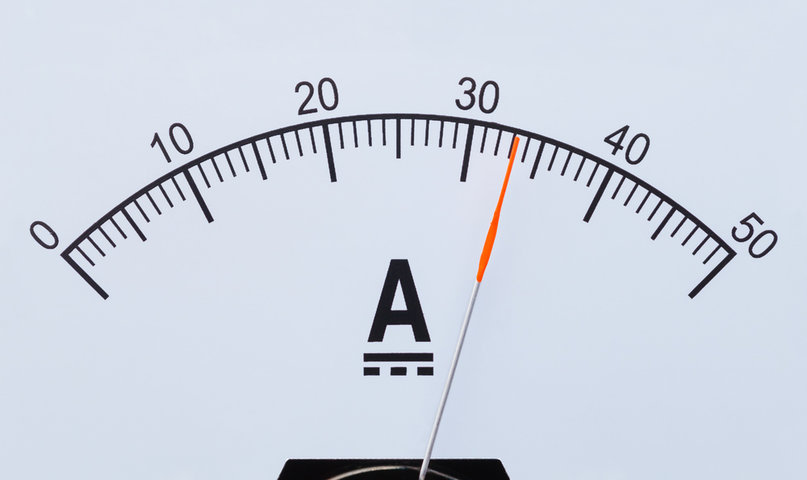
Typical Amperage Levels
| Application | Typical Amperage Range |
|---|---|
| Smartphone charger | 1-3A |
| Household circuits | 15-20A |
| Electric dryer | 30A |
| Car battery (starting) | 100-1000A |
| Industrial equipment | 1000A+ |
| Lightning strike | ~20,000A |
Role of Amperage in a Circuit
Amperage Represents the Actual Flow of Electrons Through the Circuit
While voltage exists as potential, amperage represents actual work being done. Your electrical devices consume amps, not volts. A 100-watt light bulb on a 120-volt circuit draws approximately 0.83 amps (using the formula I = W/V).
Determined by Voltage and Resistance
According to Ohm’s Law (I = V/R), current is directly proportional to voltage and inversely proportional to resistance. In simpler terms:
- Increase voltage → Increase current (with constant resistance)
- Increase resistance → Decrease current (with constant voltage)
This relationship explains why adding more appliances to a circuit (decreasing total resistance) can cause circuit breakers to trip by drawing too many amps, even though the voltage remains constant at 120V.
Volts vs. Amps: Key Differences
Voltage and amperage serve complementary but distinctly different roles within an electrical circuit.
Here are the primary differences between volts and amps summarized clearly:
| Aspect | Voltage (Volts, V) | Amperage (Amps, A) |
|---|---|---|
| Definition | Electrical potential or pressure difference | Actual flow of electric charge (electrons) |
| Analogy | Pressure of water inside a pipe | Volume of water flowing through a pipe |
| Function in Circuit | Provides the “push” for electrons | Represents the actual electron flow |
| Work Capability | Determines the capacity to perform work; does not directly do the work itself | Performs the actual electrical work, powering devices |
| Relationship with Resistance | Independent; Exists regardless of current flow | Dependent on voltage and resistance; higher resistance reduces amperage |
Voltage: Potential, Amperage: Actual Flow
Voltage describes the potential energy available to push electrons through a circuit, while amperage is the actual movement of electrons. Think of voltage as water pressure in a pipe; the higher the pressure (voltage), the greater the potential to drive water (current) through the system. Amperage, on the other hand, measures how many electrons actually flow past a point, like the amount of water flowing from a faucet.
Voltage “Pushes,” Amperage “Flows”
Voltage provides the force, or “push,” needed for electrons to move through a conductor. Without voltage, electrons won’t move—there’s no current. Amperage is the result of this push; it’s the measurable flow of electrons within the conductor. Thus, voltage pushes electrons, and amperage represents the electrons flowing.
Voltage Increases Capacity for Work, But Amperage Does the Work
Increasing voltage increases the circuit’s potential to do work—allowing more electrons to flow, overcoming greater resistance. However, voltage itself does not perform the work; rather, amperage performs the actual electrical work. Electrical appliances operate because electrons (current) move through them, converting electrical energy into useful work like heating, lighting, or mechanical energy.
Amperage Depends on Voltage and Resistance
According to Ohm’s Law (I = V ÷ R), amperage depends directly on voltage and inversely on resistance:
- Higher Voltage → Higher Amperage: Increasing voltage while keeping resistance constant results in greater electron flow.
- Higher Resistance → Lower Amperage: Increasing resistance restricts electron flow, decreasing amperage even if voltage remains unchanged.
Voltage Without Current vs. Current Without Voltage
- Open Circuit: Voltage can exist without amperage, as in an open circuit where voltage is present at the terminals but no electrons flow due to the break in the path.
- Short Circuit: Conversely, a short circuit has minimal resistance, leading to maximum amperage. Here, voltage drops drastically, often approaching zero, as electrons flow unchecked, posing potential hazards.
Clearly distinguishing between volts and amps helps in effectively designing circuits, safely handling electrical devices, and optimizing electrical system efficiency.
The Relationship Between Volts, Amps, and Ohms
Understanding the relationship between volts, amps, and ohms is fundamental to grasping electrical principles. This relationship is defined mathematically by Ohm’s Law, which shows how voltage (V), current (I), and resistance (R) interact within an electrical circuit:
Ohm’s Law:
In simple terms:
- Volts (V) represent electrical pressure.
- Amps (I) measure the flow of electrical charge.
- Ohms (R) indicate the resistance to the flow of electrons.
Calculating Power: Watts
Electrical power, measured in watts (W), describes the rate at which electrical energy is transferred or converted. Power can be calculated easily using volts and amps:
For instance, a circuit using 10 amps at 120 volts consumes:
- 120 volts × 10 amps = 1,200 watts
Hydraulic Analogy for Ohm’s Law
A practical way to visualize the relationship between volts, amps, and ohms is through a hydraulic (water) analogy:
- Voltage (Pressure): Voltage is comparable to water pressure pushing water through a pipe.
- Current (Flow): Amperage resembles the amount of water actually flowing through the pipe.
- Resistance (Restriction): Resistance acts like a narrowing or valve in the pipe, restricting the water flow.
| Electrical Concept | Hydraulic Analogy |
|---|---|
| Voltage (V) | Pressure pushing water |
| Current (I) | Volume of water flow |
| Resistance (R) | Narrow pipe or valve restriction |
Removing or minimizing resistance in the circuit (analogous to fully opening a valve or using a wider pipe) allows maximum flow, potentially causing a short circuit. Conversely, increasing resistance limits current, much like closing a valve slows water flow.
Importance of Resistance
Resistance is essential for the safe and functional operation of circuits. Its primary roles include:
- Limiting Current: By restricting current flow, resistance ensures that amperage remains within safe and usable levels, protecting circuits and devices from overheating or damage.
- Enabling Functionality: Components such as resistors, lamps, motors, and other loads introduce controlled resistance into circuits, ensuring electrical energy converts into useful forms like heat, light, or motion.
Without adequate resistance, electrical systems would experience uncontrolled current flows, potentially damaging equipment or causing safety hazards. Thus, managing resistance through careful circuit design is critical for efficient, reliable, and safe electrical operation.
Safety Considerations
Voltage vs. Amperage Hazards
While both voltage and amperage present risks, they create different hazards:
- Voltage creates the potential for current to arc through air or other insulators when high enough (typically >50V)
- Amperage is what actually causes harm to the human body through tissue heating and nerve/muscle disruption
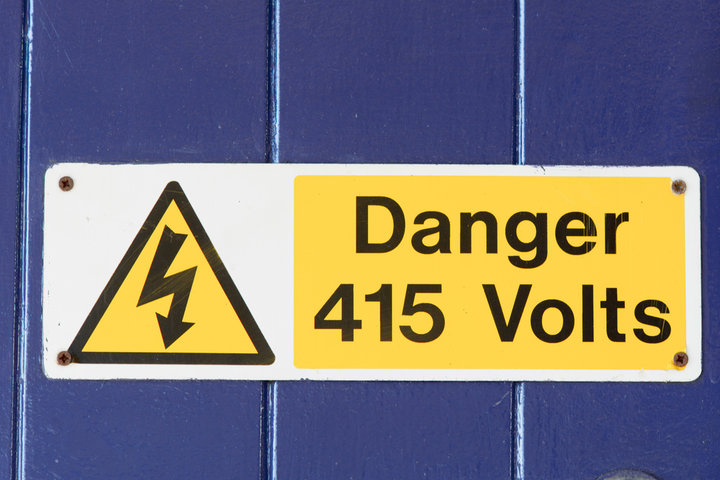
Dangerous Amperage Levels
The human body is extremely sensitive to electrical current, with even small amounts causing serious harm:
| Current Level | Effect on Human Body |
|---|---|
| 1-5 mA | Mild sensation, not painful |
| 6-30 mA | Painful shock, muscle control loss |
| 50-150 mA | Extreme pain, respiratory arrest, possible death |
| 1,000+ mA (1A+) | Heart stoppage, severe burns, likely death |
Most household circuits (15-20A) can deliver far more current than is needed for electrocution. Even a 12V car battery, despite its relatively low voltage, can produce hundreds of amps during a short circuit—enough to cause severe burns or start fires.
Importance of Protective Devices
Circuit protection devices serve critical safety functions:
- Fuses and circuit breakers interrupt excessive current flow before wiring overheats
- GFCIs (Ground Fault Circuit Interrupters) detect current leakage (as small as 5mA) and trip within milliseconds, protecting against electrocution
- Surge protectors shield sensitive electronics from voltage spikes
Avoiding Electrical Hazards
Follow these essential precautions when working with electricity:
- Always turn off power at the breaker before working on circuits
- Use insulated tools and rubber gloves when appropriate
- Never modify or bypass safety devices like fuses or GFCIs
- Ensure all equipment is properly rated for the circuit’s voltage and amperage
- Keep electrical devices away from water unless specifically designed for wet environments
Measuring and Testing Volts and Amps
Understanding how to properly measure voltage and current is essential for electrical work, troubleshooting, and safety. Different measurement tools serve specific purposes when testing electrical circuits.
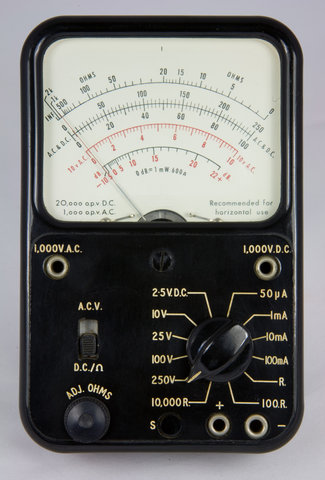
Voltmeters: Measuring Electrical Pressure
Voltmeters measure the potential difference (voltage) between two points in a circuit. Key characteristics include:
- Connection Method: Always connected in parallel across the two points being measured
- Internal Resistance: Very high (typically megohms) to prevent the meter from affecting the circuit
- Usage: Can be used while circuit is energized (non-intrusive measurement)
Ammeters: Measuring Electrical Flow
Unlike voltmeters, ammeters measure the flow of current through a conductor. Important features include:
- Connection Method: Must be connected in series with the circuit (the current must flow through the meter)
- Internal Resistance: Very low (ideally zero) to avoid affecting the circuit’s current
- Caution: Requires breaking the circuit to insert the meter, which can be hazardous with live circuits
Multimeters: The All-in-One Solution
Modern digital multimeters (DMMs) combine multiple measurement capabilities in a single device:
| Measurement | Function | Connection Method | Common Ranges |
|---|---|---|---|
| Voltage (V) | Measures potential difference | Parallel | 0-1000V AC/DC |
| Current (A) | Measures flow of electrons | Series | 0-10A (typical) |
| Resistance (Ω) | Measures opposition to current | Across component (power off) | 0-50MΩ |
| Continuity | Tests for complete circuit | Across test points | Audible beep |
Voltage Testers: Quick Safety Checks
Voltage testers offer simpler, faster verification:
- Non-contact testers: Detect voltage presence without physical contact
- Test lights: Simple devices that illuminate when voltage is present
- Ideal for: Quick verification of power status and polarity before beginning work
Clamp Meters: Safe High Current Measurement
Clamp meters solve the danger of inserting ammeters into high-current circuits:
- Measure current without breaking the circuit
- Use electromagnetic induction to detect current flowing through a conductor
- Simply clamp around a single wire to measure current
- Can measure currents from milliamps to hundreds of amps safely
- Some models include multimeter functions for voltage and resistance
When selecting measurement tools, always ensure they’re rated for the voltage and current levels you’ll be working with, and follow proper measurement techniques to maintain safety and accuracy.
Summary
Volts measure electrical pressure, while amps measure current flow. Both are essential when working with electricity.
Ohm’s Law and Watt’s Law explain how volts, amps, and resistance interact, helping in circuit design and troubleshooting.
Knowing these differences keeps electrical work safe and effective.
Frequently Asked Questions (Volts vs. Amps FAQ)
Q: What is the difference between a volt and an amp?
A: Volts measure electrical potential difference (pressure) between two points, while amps measure the volume or rate of electrical current flow. Using the water analogy, voltage is like water pressure in a pipe, while amperage is like the volume of water flowing through. Volts represent the force pushing electrons, while amps represent how many electrons are actually flowing. Both work together but measure fundamentally different aspects of electricity.
Q: How many amps are in a volt?
A: This question contains a misconception. Amps and volts measure different electrical properties and aren’t directly convertible. There aren’t “amps in a volt” – they’re distinct units. Using Ohm’s Law, one volt will push one amp through one ohm of resistance. The relationship is expressed as I = V/R, where current (amps) equals voltage (volts) divided by resistance (ohms). Without knowing resistance, you cannot convert between them.
Q: How many volts are there in ampere?
A: Volts and amperes measure different electrical properties and cannot be directly converted. Voltage measures electrical pressure/potential difference, while amperage measures current flow. The relationship between them depends on resistance, as defined by Ohm’s Law (V = I × R). One ampere is the current produced when one volt acts through one ohm of resistance. They are related quantities but fundamentally different measurements.
Q: Is 1 amp equal to volt?
A: No, 1 amp is not equal to 1 volt. They measure different electrical properties: amps measure current flow while volts measure electrical potential difference. According to the definition, “an ampere is the amount of current produced by the force of one volt acting through a resistance of one ohm.” They’re related through Ohm’s Law (V = I × R) but are distinct units measuring different aspects of electricity.
Q: Can you convert volts to amps?
A: Yes, you can convert volts to amps using Ohm’s Law (I = V/R) or the power equation (I = W/V). However, you need additional information—either resistance or power. For example, to convert 120 volts to amps, you would calculate: 4160 watts ÷ 208 volts = 20 amps, or 3600 watts ÷ 240 volts = 15 amps. Without knowing resistance or power, direct conversion is impossible.
Q: How many amps is a car battery?
A: A 12-volt car battery typically supplies 30-50 amps during normal operation but can produce up to 600 amps during high-demand situations like engine starting. The average car battery has a capacity of approximately 48 amp-hours (Ah), meaning it can provide 1 amp for 48 hours or 48 amps for 1 hour when fully charged. Higher Ah ratings indicate larger capacity batteries with longer endurance.